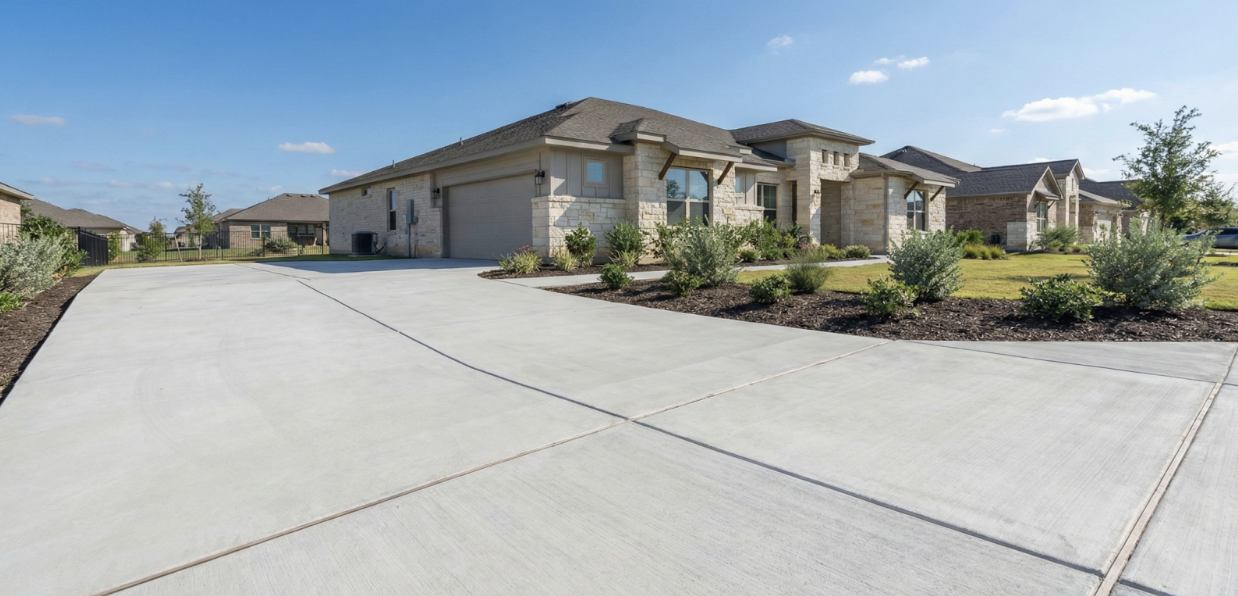
Winter in Central Texas may be milder than in many parts of the country, but it still presents unique challenges for concrete installation, repair, and resurfacing. Cooler temperatures, fluctuating weather, and occasional cold snaps can all affect how concrete performs if the work isn't planned correctly.
when handled by an experienced local contractor.
Is Winter a Good Time for Concrete Work in Austin?
Unlike northern regions, Austin and surrounding cities rarely experience prolonged freezing temperatures. This allows many concrete projects to continue throughout the winter months with proper planning.
In fact, cooler weather can be beneficial for concrete curing when conditions are stable. Lower temperatures slow evaporation, which helps concrete gain strength more evenly compared to extreme summer heat.
However, timing and technique are critical. Contractors must monitor temperatures closely and adjust materials and curing methods to protect the concrete during colder nights.
How Cold Temperatures Affect Concrete
Concrete is most vulnerable in the first 24–48 hours after it is poured. If temperatures drop too low during this period, the curing process can slow or stop, potentially weakening the concrete surface.
In Central Texas, the main concern isn't long-term freezing but sudden overnight temperature drops. Professional contractors address this by:
-
Scheduling pours during optimal daytime conditions
-
Using cold-weather mix adjustments when needed
-
Protecting fresh concrete during cooler evenings
These precautions help ensure concrete reaches proper strength even during winter conditions.
Winter Concrete Repairs and Resurfacing
Winter is often an ideal time for concrete repairs and resurfacing, especially for driveways and patios that experienced damage during summer heat or fall rains.
Cooler temperatures allow resurfacing materials to bond more effectively, resulting in a smoother, longer-lasting finish. Addressing cracks and surface wear during winter also prevents water from entering the concrete and causing further damage when temperatures fluctuate.
Planning for Spring With Winter Concrete Projects
Many homeowners use winter as a preparation period for spring and summer. Completing concrete projects during the slower season can help avoid scheduling delays when demand increases later in the year.
Winter is a great time to:
-
Replace or repair aging drivewaysWinter is a great time to: - Replace or repair aging driveways
-
Prepare patios for spring entertaining
-
Install foundations or slabs for upcoming projects
By planning ahead, homeowners can enjoy finished concrete surfaces as soon as warmer weather arrives.
Why Local Experience Matters in Winter
Winter concrete work requires an understanding of local climate patterns, not just general cold-weather practices. Contractors familiar with Austin-area conditions know when temperatures are safe for pouring and how to protect concrete during unpredictable weather shifts. This local knowledge helps prevent issues like surface scaling, weak curing, or premature cracking—problems that often result from improper winter installation.