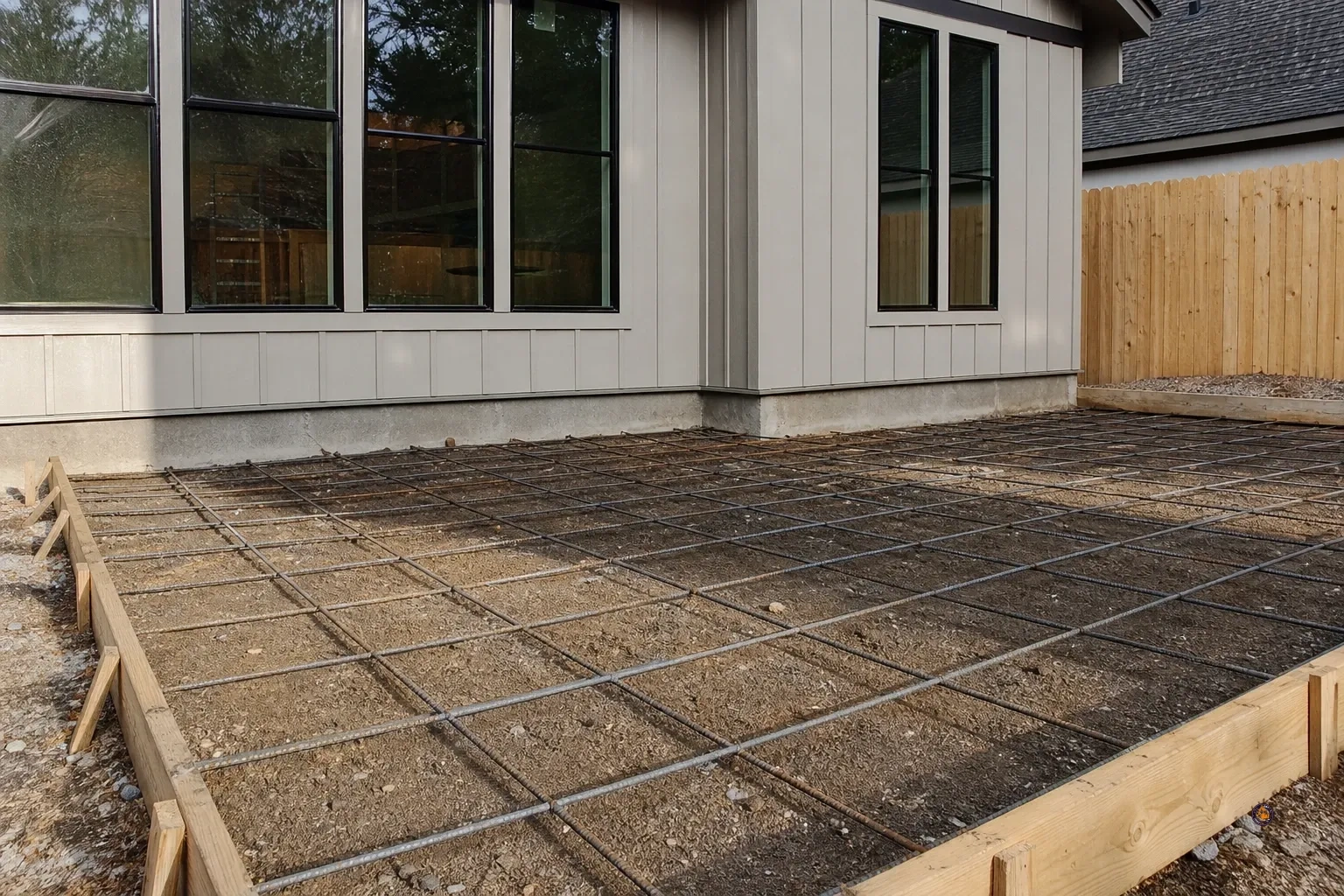
Assess site conditions like drainage and surface cracks before scheduling a concrete pour to ensure project durability. Those simple observations shape smarter questions and will determine how well your slab holds up through heat, cold snaps, or a rainy week.
What you ask your concrete contractor should change with the forecast. Here is a behind-the-scenes look at the decisions that matter and the questions that help you get clear answers before the truck ever rolls.
The non-negotiables to confirm for any pour
Some topics are weather-agnostic. Get these squared away first, then tailor the rest to heat, cold, or rain.
Drainage and finished height. Have the contractor show you the path from high points to daylight and how the slab edges and nearby grades work together. You are not looking for a universal slope number. You are looking for a clear plan that matches your site. Subgrade and base. A smooth finish cannot rescue a weak base. If you are weighing slab choices or comparing options, our overview of slab decisions in the Essential Guide to Concrete Slabs for Construction Projects can help you frame the conversation.
Jointing and reinforcement intent. Control joints help manage where cracks appear. Ask to see a sketch of joint locations and spacing relative to slab geometry and openings, and clarify where reinforcement is planned. You are not trying to prescribe spacing. You want to understand the logic. Curing plan. Curing is not a box to check. It is how a slab develops strength and durability. ACI publishes dedicated curing guidance, which is project-specific rather than one-size-fits-all; that is why your contractor should be able to explain their reasoning.
Access and logistics. Confirm truck access routes, backup plans if a pump is needed, where materials and tools will stage, and what needs to be moved or protected. Surprises here are expensive. Environmental controls and washout. Learn more from the EPA’s overview of concrete washout management.
Neighbor impacts and schedule. Discuss noise windows, parking, and the likely pour start time. Early starts are common for quality reasons, not just convenience.
Once you have alignment on those basics, adjust your questions to the weather you are likely to get during placement and the first week of curing.
If the forecast is hot
These conditions shape placement pace, finishing strategy, and curing.
Ask:
When will you place and finish to avoid the hottest window? Early mornings are nearly always better. Ask how the plan changes if a heat advisory is issued. How will you manage rapid evaporation and finishing? You want to hear how they will watch the surface and time finishing passes, not a promise that heat is a non-issue.
What is the plan for curing in heat? The method depends on the product and your site, which is why a clear explanation matters. High temperatures can accelerate curing times, leading to potential cracking if not managed properly. How will jointing be handled as the set accelerates? In hot weather, the window for sawcutting can shrink. Ask who is responsible for monitoring set and cutting at the right time to reduce uncontrolled cracking.
What surface texture will balance safety and cleanability? For driveways, pool decks, and patios, discuss traction and heat. A finish that looks sleek in the showroom might be slick or too hot to touch in August. What is the plan for shade, wind breaks, or other site-specific mitigations? The goal is not gimmicks. It is reducing unnecessary evaporation and giving the slab a fair shot at consistent curing.
For homeowners comparing decorative options, ask how color, stamps, or overlays will be handled in summer conditions and whether the process changes your curing window. Your goal is a durable surface, not just a photogenic pour day.
If the forecast is cold
You are listening for a plan based on conditions and materials, not a single magic temperature.
- How will the team protect edges, corners, and thin sections, which cool fastest? Covers or insulation may be needed. The details will depend on your slab.
- What changes with finishing and jointing timing in the cold? Slower set means a different pace. You want to know who is watching and adjusting.
- How does cold weather affect when you can drive, set equipment, or place furniture on the slab? Ask for practical use milestones and what signs signal it is ready for light use. Cold temperatures can slow curing times and affect the concrete's strength development, so understanding the specific thresholds is crucial.
If you want a deeper dive into seasonal planning, our guidance on concrete work in winter for Austin homeowners outlines what to consider before, during, and after a cold-weather pour.
If rain is in the mix
Make rain planning explicit.
You want criteria, not a shrug. How will the subgrade and base be checked after recent rain? Ask who decides whether the base is too wet or soft to support placement and what the remediation is if it is not ready.
Where will rain be diverted during and after placement? The forms, adjacent grades, and any temporary berms should work together so water does not pond on fresh concrete or carve ruts alongside it. What is the cover plan if a pop-up storm hits mid-pour or during finishing? Ask what materials are on hand and who calls the pivot.
How will runoff, slurry, and washout be contained? This is both a quality concern and an environmental responsibility. Confirm the plan to keep muddy water and paste off streets, lawns, and drains, as emphasized in EPA’s concrete washout guidance. What happens if it rains within the first 24 to 48 hours after finishing? Ask whom to call and what you should and should not do as the slab cures.
Questions that finalize scope and reduce disputes
Weather is only part of a good plan. Clarify the edges of responsibility so the work fits your site and expectations.
Site prep. Who removes soft spots, organics, or roots, and who replaces them with suitable base? If you are deciding how a slab should be built for your space, use the Essential Guide to Concrete Slabs for Construction Projects to align on subgrade, base, and formwork decisions before finish options. Elevations. Who sets and verifies the finished height at doors, garages, stoops, gates, and landscape transitions?
Adjacent structures. How will the new slab tie into existing flatwork, steps, or the pool deck? Ask what isolation joints or separations are planned. Use and load. What vehicles, equipment, or furniture will be on the slab, and how often? That use case frames the design conversation. A patio is not a trash-truck apron.
Joint layout. Ask to see the joint plan on the actual footprint, not just described verbally. Take a photo of the layout marks before the pour for reference. Finishes and coatings. If you plan to stain, seal, or coat later, ask what surface profile and cure time your chosen product requires. Do not trap moisture. If cracking expectations concern you, our overview of why concrete cracks in Austin explains common causes and what is manageable versus what signals a bigger issue.
Communication. Who is your day-of contact, and how will last-minute weather calls be communicated? Agree on a window, not a single time.
Quick observations you can make before you call a contractor
Bring these notes to your first conversation. They turn a vague ask into a focused plan.
After rain or a hose-down, where do puddles form and how long do they last?
- Where does water currently leave the space, and does it cross a walkway, driveway, or neighbor’s yard?
- Which parts of the area get full sun, partial shade, or steady wind during morning and afternoon?
- How do you use the space today, and what will change with the new slab?
- What objects, trees, or fixtures must remain, and what can move?
- Where can trucks stage without damaging landscaping or irrigation?
Mistakes to avoid that weather makes worse
A few avoidable pitfalls show up in every season. Weather only magnifies them.
Choosing finish and color before the base and drainage are right. Texture and palette are the last 5 percent. Durability is decided earlier. Treating curing as an afterthought. Whether it is 102 and windy or damp and chilly, curing is how you earn long-term strength and surface quality. Ask for the plan.
Ignoring jointing until after the pour. Joint layout is not cosmetic. It is part of how the slab controls inevitable cracking. Rushing back into use. Let the slab get past the vulnerable stage before parking, staging, or pressure washing. Ask for practical milestones and stick to them.
Hiring on price alone. If you find yourself scanning “concrete company near me” results, remember that answers to the questions above predict performance far better than a low bid or a glossy photo.
A focused checklist of weather-shaped questions
Use this as a conversation starter with any concrete contractor planning your pour in Austin or nearby communities.
Where will water go after the new slab is in place, and how do the surrounding grades support that plan?
- What is the subgrade and base plan for uniform support, and how will you verify it on pour day?
- How will control joints be laid out for my slab geometry, and when will they be cut?
- What curing method fits this project and this week’s weather, and how long should we protect the surface?
- What time will you pour and finish to avoid the hottest or coldest window?
- How will you manage rapid evaporation or slow set, depending on the forecast?
- What is the rain contingency, including start/stop criteria and cover materials on hand?
- What surface texture is appropriate for my use so the slab is safe and easy to maintain?
- When can I safely walk, place furniture, or park on the slab, and what early-care steps should I take?
- Who is my day-of contact if the weather changes?
- Can you mark the joint layout and finished height on site so we confirm before the pour?
Hot, cold, or wet does not make concrete impossible in Austin. It just changes the questions to ask. If you keep drainage, base, jointing, curing, and a weather-aware placement plan at the center of your discussion, you will get clarity from your builder and the long-term performance you expect.