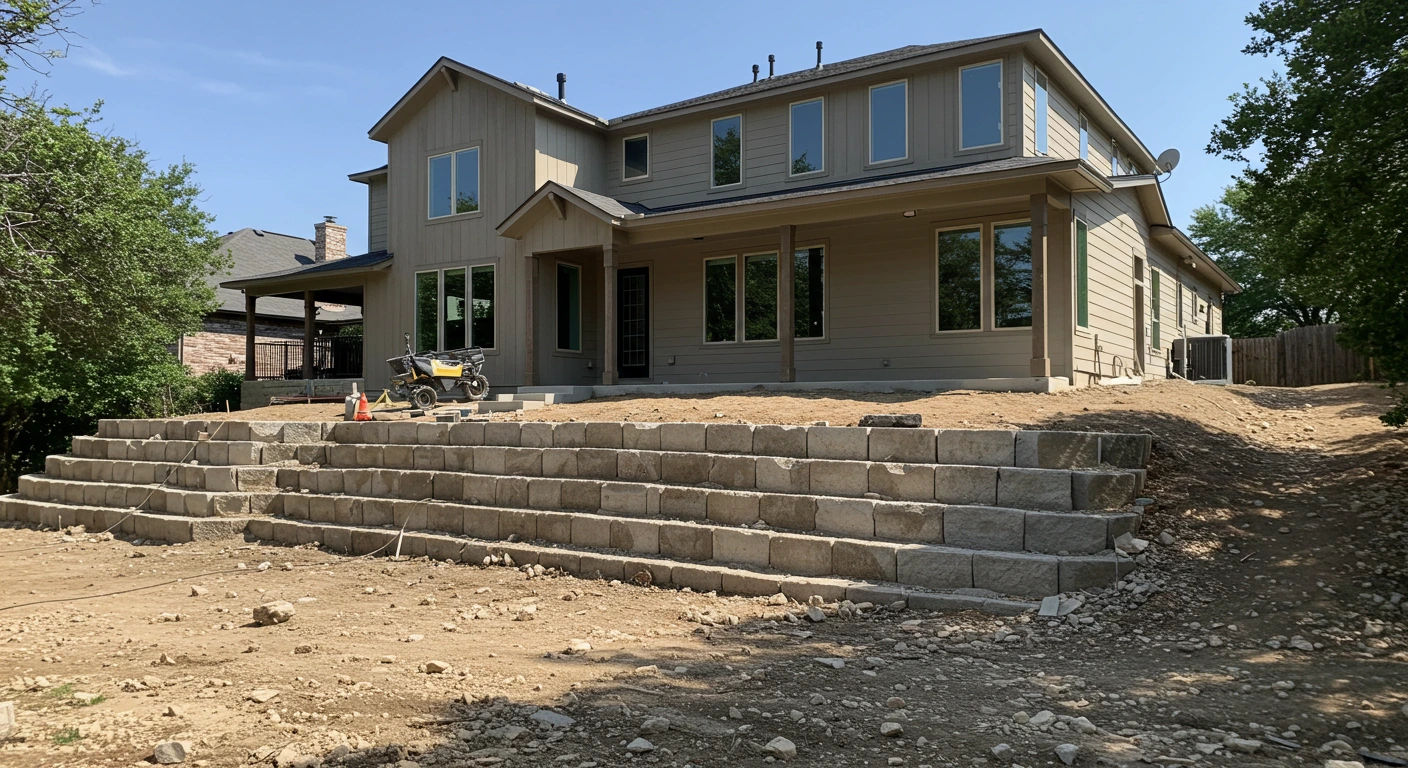
A single night of heavy Texas rain can turn a backyard slope into a muddy cascade, washing topsoil onto sidewalks or threatening the stability of patios and fences. In Austin, where our homes often perch on rolling hills or sit atop clay-heavy ground, erosion isn’t just a distant worry, it’s a real and recurring headache. That’s exactly why we’re called in to build concrete retaining walls that do far more than just hold dirt in place: we craft them to protect homes, shape landscapes, and quietly add value to every property we touch.
Why Erosion Is a Real Threat in Austin
Every time we walk a property in Austin, we pay close attention to the subtle telltale signs: a line of exposed roots, tilting fence posts, or water pooling at the base of a yard. The city’s unique mix of clay soils and sudden downpours means erosion can sneak up quickly and cause lasting damage. In neighborhoods like Westlake, Bee Cave, or even the flatter areas of Pflugerville, we’ve seen how uncontrolled runoff can undercut driveways, sink patios, and even threaten a home’s foundation.
Left unchecked, erosion can lead to:
- Unstable ground that shifts beneath patios and walkwaysLeft unchecked, erosion can lead to:
- Unstable ground that shifts beneath patios and walkways
- Washed-out garden beds and lost landscaping investments
- Silt and debris piling up against fences or in storm drains
- Moisture intrusion and structural risks to the home itself
We know these issues aren’t just cosmetic, they affect safety, insurance costs, and long-term property value. That’s where a well-designed concrete retaining wall truly earns its keep.
The Real Work Behind a Concrete Retaining Wall
Clients often assume a retaining wall is just a matter of stacking blocks and pouring concrete. In reality, our process begins several steps before a single shovel hits the ground. Here’s what you don’t see driving by a finished wall in Tarrytown or Rollingwood:
First, we analyze the site’s slope, soil composition, and drainage patterns. Central Texas is notorious for its shifting clay and pockets of limestone. We run soil tests and use our local experience to anticipate how water will move, where pressure will build up, and what kind of reinforcement the wall will need.
Next, we plan for drainage. This is where shortcuts cause most failures. Without proper weep holes, gravel backfill, or perforated pipe behind the wall, water pressure can build up and push even the strongest wall outward. We design every retaining wall to direct stormwater away from structures and into safe runoff zones, preserving both the wall and your yard.
Only then do we get to excavation. We dig a trench below the frost line (yes, even in Austin’s mild winters, this matters), ensuring the wall’s footing sits on undisturbed soil for maximum stability. We form and pour a reinforced concrete base, using rebar grids or mesh to prevent future cracking and movement.
As we go. For taller walls, we may use concrete blocks with internal reinforcement, or even pour the wall in place with embedded rebar cages. The finish, whether smooth, textured, or decorative, comes last, but its durability depends on every hidden detail beneath the surface.
Judgment Calls Only Locals Get Right
No two yards in Austin are exactly alike, and that’s why we never take a cookie-cutter approach. We’ve seen “universal” wall designs fail because they didn’t account for a property’s real-world conditions. For example, the slope behind a home in Lakeway may need a more substantial footing than a gentle grade in Sunset Valley. In some cases, we adapt the wall’s shape to curve with the land, reducing lateral pressure and blending seamlessly into the landscape.
One of the most important decisions we make is choosing the right wall height and setback. City codes and HOA rules vary, and exceeding four feet in height often requires permits and engineering stamps. We walk you through these requirements up front, so there are no surprises mid-project.
We also help clients decide where a retaining wall will do the most good. Sometimes, a low wall along a driveway can prevent years of soil creep. Other times, a tiered system with steps doubles as both a functional barrier and a focal point for outdoor living.
Erosion Control That Lasts Decades
The real test of a retaining wall isn’t how it looks on day one, but how it holds up after five, ten, or even twenty Austin storms. We’ve been called to replace walls that failed because they skimped on drainage or skipped steel reinforcement. Our philosophy is simple: if you’re going to invest in a concrete retaining wall, do it once and do it right.
Here’s how our walls prevent erosion year after year:
- Internal drainage systems keep hydrostatic pressure from building up.
- Reinforced footings and wall cores resist ground movement.
- Proper grading ensures water flows away from structures, not toward them.
- Durable finishes resist Austin’s harsh sun and sudden freezes.
Because we’re local, we check our own work over time. We’ve revisited projects years later and seen our walls still standing strong, protecting yards and homes from the relentless Texas elements.
Adding Real Value, Not Just Function
A well-built retaining wall does more than guard against erosion. We’ve seen firsthand how these structures increase usable yard space, create new planting beds, and give properties a tailored, high-end look that stands out in Austin’s real estate market.
Potential homebuyers notice the difference. They see a level lawn for kids to play on, an inviting patio that won’t flood, and landscaping that stays put through every season. Our clients often tell us their appraisers and realtors point out the retaining wall as a value-adding upgrade, sometimes making the property more appealing than neighboring homes without one.
If you’re considering future projects like patios, walkways, or even a pool, a retaining wall can be the foundation (literally and figuratively) for years of improvements. We love working with homeowners on phased plans: first, secure the slope; next, add steps, lighting, or even built-in seating to turn a retaining wall into a true outdoor feature.
To see how retaining walls fit into a broader plan for exterior upgrades, you might find our residential concrete services guide helpful.
The ATX Concrete Retaining Wall Process: What Really Happens on Your Project
There’s no substitute for seeing the process up close, so let’s break down what actually happens when we build a retaining wall for your Austin property:
- Site Visit and Consultation: We meet with you on site, no generic phone quotes. We walk the property, listen to concerns about flooding or soil loss, and take precise measurements. We also check for underground utilities and review any city or HOA rules.
- Design and Engineering: Our team drafts a detailed plan that covers wall height, thickness, materials, drainage, and finish. For taller walls, we collaborate with structural engineers who understand Austin’s unique soil conditions. We share the design with you before breaking ground.
- Permitting (If Needed): If your wall is over four feet tall or near a property line, we handle the paperwork and permitting process, saving you the headache.
- Excavation and Footing: We dig down to stable soil, compact the base, and pour a reinforced concrete footing. This hidden step is crucial for long-term stability.
- Wall Construction: We build the wall course by course, adding steel reinforcement and drainage systems as we go. We backfill with gravel, not just dirt, to ensure proper water movement.
- Finishing Touches: We apply your chosen texture, color, or decorative pattern. We can also add capstones, steps, or integrated lighting if desired.
- Site Cleanup and Final Inspection: We leave your yard tidy, walk you through the finished wall, and provide tips for maintenance (though our walls require very little).
Throughout the process, we’re transparent about timelines, costs, and any unexpected discoveries, like a hidden boulder that might require a design tweak.
What Sets Our Walls Apart from the Rest
We take pride in the details most people never notice but that make all the difference over time. For example, we use commercial-grade geotextile fabric behind walls to keep soil in place while allowing water to pass through. We choose rebar spacing and wall thickness based on actual soil pressure, not just a standard chart. Our drainage pipes are sized for Austin’s heaviest downpours, not just the average rain.
We also believe in clear communication. We walk you through every decision, explain the “why” behind our methods, and stand behind our work with a quality guarantee. Our reputation in Austin is built on projects that last, and on clients who refer us to neighbors after seeing a wall survive another storm intact.
For more on how we approach concrete craftsmanship in every project, see our about page.
Beyond Erosion: Creative Uses for Concrete Retaining Walls
While erosion control is the practical driver, retaining walls can add aesthetic value and functionality you might not have considered. We’ve designed multi-level terraces for homes in West Lake Hills, created custom planters as part of a wall system in Buda, and integrated seating for outdoor fire pits in Lakeway.
A retaining wall can transform a sloping, underused yard into a series of level zones: a play area, a garden, even a shaded retreat. With decorative finishes, exposed aggregate, or stamped concrete, your wall can become a design highlight rather than just a background element.
For inspiration on how retaining walls and other concrete features can work together to upgrade your property, explore our decorative concrete services.
Ready to Reinforce Your Austin Property?
We know Austin’s hills and soils can be tricky, but with the right planning and craftsmanship, a concrete retaining wall is one of the smartest long-term investments you can make in your home. Whether you’ve spotted early signs of erosion, want to reclaim more usable yard, or are curious how a retaining wall might raise your property’s value, we’re here to walk you through every step, no shortcuts, no missed details, just results you can count on for decades.
If you’re ready to see how a concrete retaining wall could protect and add value to your property, reach out to us for a free consultation. What challenge can we solve for your yard this season?