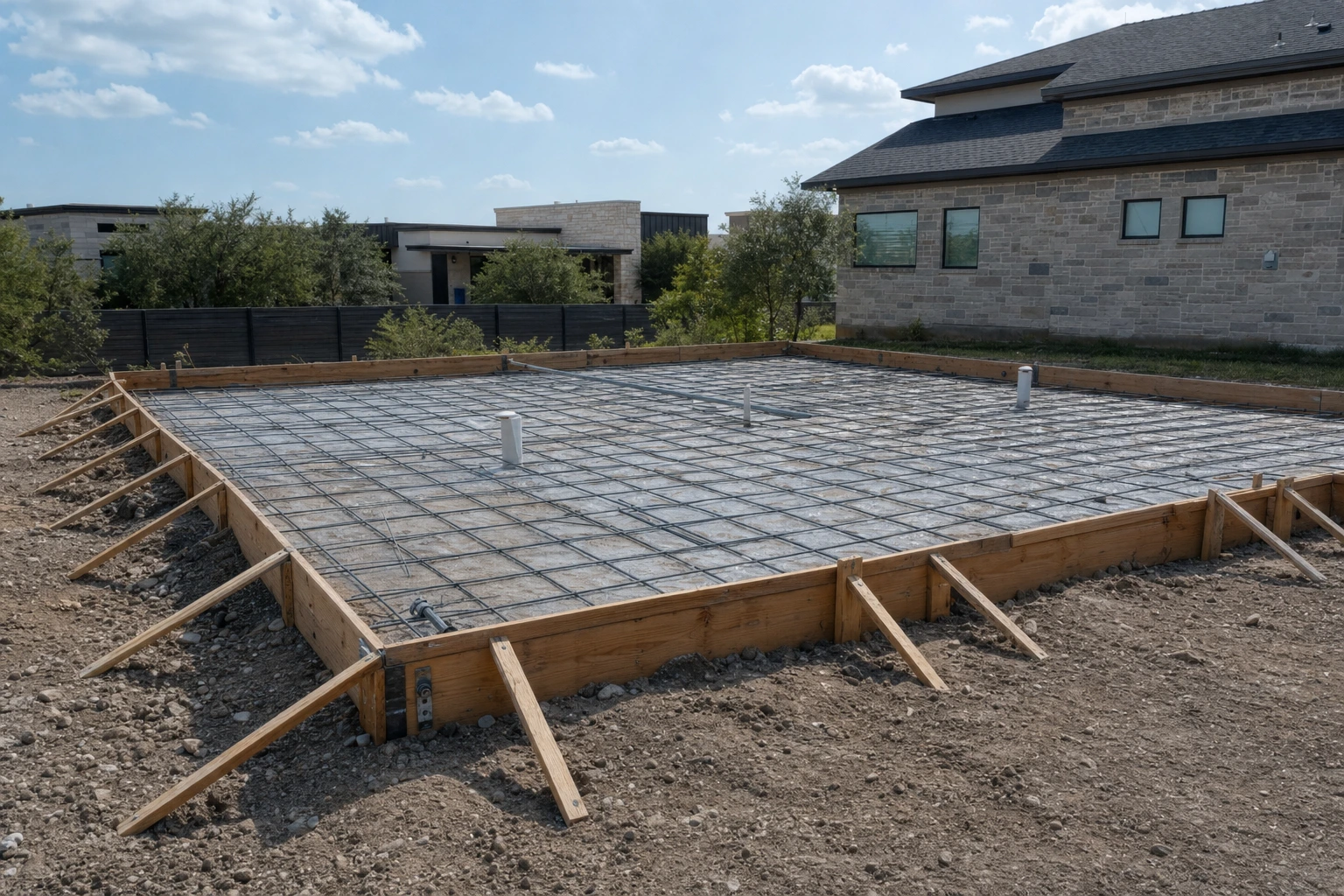
A summer afternoon in Austin can push the mercury past 105°F. At the same time, a sudden thunderstorm can drop inches of rain in less than an hour. If you’ve ever wondered why some homes in our city develop cracks in their foundations while others seem rock-solid, the answer almost always comes back to how climate influences every step we take as concrete foundation specialists. As a team that’s spent years pouring, curing, and repairing foundations across Central Texas, we’ve seen firsthand the hidden factors that guide our decisions, long before we ever break ground.
The Climate Puzzle We Solve on Every Project
Austin’s climate isn’t just “hot” or “humid”, it’s a complex mix of temperature swings, intense sun, unpredictable rain, and notorious soil movement. Each of these elements has a direct impact on the foundations we build. Unlike other regions where one approach fits most homes, our work starts with a climate checklist that shapes every judgment call.
We pay close attention to seasonal rainfall patterns, the frequency of drought, and the extremes of summer heat. Just last year, we saw a string of homes in South Austin struggle with foundation upheaval after a particularly wet spring followed by a record-breaking dry spell. That type of climate whiplash can split a poorly designed slab or twist a crawl space beyond repair.
How Soil and Moisture Drive Our Foundation Choices
The story always starts with the ground beneath your feet. Austin’s expansive clay soils, commonly called “black gumbo”, are infamous for swelling when wet and shrinking when dry. What most homeowners don’t see is how the moisture content in the soil can change by the week, pulling and pushing at your concrete foundation.
Our first behind-the-scenes step isn’t pouring concrete, it’s digging test holes, measuring soil moisture, and working with geotechnical engineers to get a profile of what lies below. This data helps us decide between slab-on-grade, pier and beam, or a post-tensioned slab. For instance, in neighborhoods near Barton Springs where the water table rises quickly, we’re extra cautious about slab thickness and vapor barriers. In drier, higher-elevation zones like northwest Austin, we might reinforce with deeper piers to reach stable ground.
Timing the Pour: Beating the Heat and Rain
You might picture foundation work as a straightforward pour, but in Austin, timing is everything. Pour too early in the morning and overnight humidity can impact the set. Pour too late and the midday sun accelerates the cure, risking surface cracks. We constantly monitor the weather forecast, sometimes rescheduling at the last minute to avoid an unexpected downpour or a heatwave.
One of our most memorable projects involved a slab scheduled for early August. With temperatures forecasted to hit 104°F by noon, we started at sunrise, shaded the work area, and used evaporation retardants to slow the surface dry time. Our crew kept a close eye on the mix temperature, adjusting water and admixtures on the fly to ensure a consistent cure. Every hour, we measured surface temps with infrared thermometers, ready to cover the slab if rain clouds rolled.
Choosing the Right Mix for Austin’s Extremes
Concrete isn’t a one-size-fits-all material. The proportions of cement, aggregate, water, and chemical admixtures change based on weather and subsoil conditions. In Austin, we often tweak our mix designs to handle fast moisture loss and minimize shrinkage cracking. For example, adding fly ash or silica fume can improve workability and long-term strength, especially when hot weather threatens rapid evaporation.
We also pay attention to the water-cement ratio. Too much water makes the mix easy to pour but weakens the final product and makes it more vulnerable to freeze-thaw cycles or rapid drying. Too little water, and the mix won’t flow or bond properly. It’s a balancing act we adjust for each project, sometimes even batch by batch if the weather changes mid-pour.
Curing and Aftercare: The Hidden Work That Guarantees Longevity
The job isn’t done once the concrete is poured. Curing, keeping the slab moist and at a stable temperature for days or even weeks, is one of the most critical steps, especially in Austin’s climate. We use curing blankets, water misting, and specialized curing compounds to slow evaporation and protect the surface from the brutal Texas sun.
Weather can still throw us curveballs. Last spring, we had a week of unexpected rain during curing. Instead of risking water pooling and surface weakening, we set up temporary drainage and tarps, adjusting our schedule to maintain the right moisture levels. These small, behind-the-scenes tweaks make the difference between a foundation that lasts 50 years and one that needs repairs after a decade.
Foundation Upgrades: What We Recommend When Climate Is a Concern
If you’re building new or repairing an existing foundation in Austin, we often recommend a few key upgrades based on climate realities:
- Post-tensioned slabs: These use steel cables to actively compress the concrete, helping it resist cracking from soil movement and temperature swings.
- Deeper footings or piers: Especially in areas with highly active clay, going deeper anchors your foundation in stable soil, reducing the risk of shifting.
- Moisture barriers: Vapor barriers and drainage systems keep water where it belongs, away from your foundation, minimizing both swelling and shrinking.
For homeowners already seeing minor cracks, we often suggest regular inspections and proactive sealing. Our essential guide to concrete sealing in Austin explains why this simple step can prevent major issues down the road.
Why Local Experience Makes the Difference
Every decision we make, from the mix in the truck to the timing of the pour, is shaped by years of working with Austin’s unique climate. We’ve learned from projects in every neighborhood, East Austin’s flood-prone lots, Westlake’s rocky slopes, and the ever-shifting soils of Pflugerville and Hutto. That experience lets us spot problems before they start and tailor each foundation to handle whatever the weather throws at it.
If you’re planning a new build or worried about your current foundation, our essential guide to concrete foundations for home stability offers a deeper look at what makes a strong, resilient base in Central Texas.
What Would You Do Differently If You Could See Underground?
Most homeowners never see the hours we spend testing soil, tweaking concrete recipes, or waiting out the weather. But those behind-the-scenes choices are what keep your home stable for decades. If you could see the invisible forces at work under your house, the swelling clay, the shifting moisture, the relentless Texas heat, what foundation would you choose?
We’ve made it our job to answer that question on every project. If you want to learn more about how we handle Austin’s climate challenges, or if you’re considering a new foundation, explore our residential concrete services or reach out for a personalized assessment. Your foundation is only as strong as the thought and care that goes into every hidden detail.
Atxconcretecontractor.com