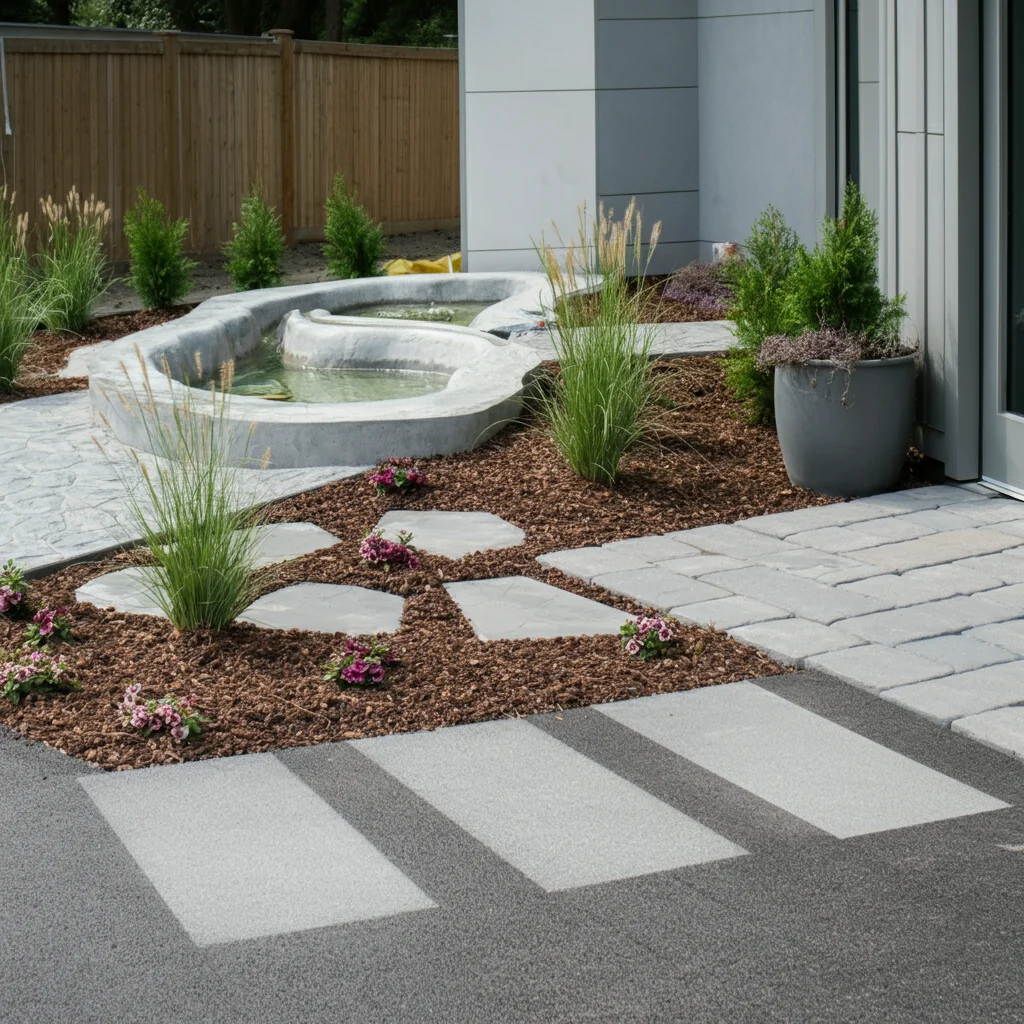
Concrete patios, walkways, and driveways bring durability and a clean, modern look to any property, but the hard lines and neutral color of concrete can sometimes feel stark without the right landscaping. With thoughtful design choices, you can soften these surfaces, boost curb appeal, and create outdoor spaces that are both welcoming and cohesive. Well-planned landscaping around concrete features not only enhances aesthetics but also adds value and functionality to your home.
Below, you’ll find practical, actionable landscaping tips for concrete features, including plant recommendations, lighting ideas, and design principles to help you get the most out of your outdoor spaces.
Assess Your Concrete Features and Site
Before digging into plant selection and design details, take a close look at your existing concrete features and surrounding landscape. Note the orientation of patios and walkways, sun and shade patterns, drainage, and any views you want to highlight or screen. Consider how each concrete element connects to your home and the flow of foot traffic.
For example, a driveway bordered by a lawn requires different landscaping than a backyard patio where you entertain guests. Observe how water runs off your concrete during rain, proper grading and drainage are critical to prevent erosion or pooling in adjacent planting beds.
Define the Edges: Borders and Bed Design
Crisp, well-defined edges create a polished look and help keep soil and mulch off your concrete surfaces. There are several ways to craft attractive borders:
- Concrete or Stone Edging: Use poured concrete, pavers, or natural stone to create a permanent, low-maintenance edge that ties in with your hardscape.
- Metal Landscape Edging: Powder-coated steel or aluminum offers a sleek, modern look and is especially effective for curving beds along walkways.
- Plant Borders: Dense groundcovers or low-growing shrubs can serve as living borders, softening the transition between concrete and garden beds.
Curved beds work well to break up the straight lines of walkways and driveways, while geometric beds can emphasize contemporary or minimalist designs.
Select the Right Plants for Your Climate and Style
Choosing plants suited to your local climate and the microclimate around your concrete is essential for long-term success. Concrete can reflect heat and light, making nearby soil hotter and drier than other parts of your yard. Focus on tough, drought-tolerant species that thrive in these conditions.
- Grasses and Groundcovers: Fountain grass, liriope, sedge, or creeping thyme add movement and texture. They’re perfect for narrow strips along walkways or driveway edges.
- Perennials: Salvia, coreopsis, black-eyed Susan, and Russian sage provide seasonal color and thrive in heat.
- Shrubs: Boxwood, dwarf yaupon holly, or abelia offer year-round structure and require minimal pruning.
- Accent Plants: Agave, yucca, and other architectural succulents create striking focal points and require little water.
- Shade Plants: For areas beside north-facing patios or shaded walks, ferns, hostas, or aspidistra can flourish.
Mix evergreen and deciduous plants for year-round appeal. Layer heights, with taller shrubs at the back, medium perennials in the middle, and low groundcovers in front, to create depth and visual interest.
Add Color, Texture, and Seasonal Interest
A successful landscape around concrete features doesn’t rely solely on green foliage. Incorporate plants that offer blooms in various seasons, colorful foliage, and interesting textures.
- Spring: Tulips, daffodils, and iris brighten up early concrete patios.
- Summer: Daylilies, lantana, and coneflowers tolerate heat and add vibrant color.
- Fall: Ornamental grasses and sages provide movement and late-season interest.
- Winter: Evergreen shrubs, red-twig dogwood, and berries from hollies or nandina add color when other plants are dormant.
Using a variety of leaf shapes and plant forms can soften the hard lines of concrete and make patios and pathways feel more integrated into the surrounding landscape.
Incorporate Mulch and Rock for Low-Maintenance Beauty
Mulch is vital in planting beds around concrete, helping retain moisture, suppress weeds, and regulate soil temperature. Organic mulches like shredded bark or pine needles suit naturalistic designs, while gravel or decomposed granite can give a modern, xeriscape vibe.
For ultra-low-maintenance zones, consider using decorative gravel, river rock, or tumbled glass mulch interspersed with drought-tolerant plants. These materials prevent soil from spilling onto the concrete and create a clean, finished look.
Soften Hardscape with Vertical Elements
Tall elements draw the eye upward and help blend concrete into the landscape. Options include:
- Trellises and Arbors: Train climbing roses, jasmine, or evergreen vines like star jasmine on trellises beside concrete patios for fragrance and shade.
- Container Gardens: Large pots with small trees or mixed plantings can frame entryways or break up long stretches of concrete.
- Espaliered Trees or Shrubs: These trained plants add greenery without taking up much space, ideal for narrow areas along fences or walls.
Smart Lighting for Ambiance and Safety
Lighting is a game-changer for patios, walkways, and driveways, adding both beauty and practical benefits after dark.
- Path Lights: Low-voltage LED fixtures along walkways ensure safe footing and highlight planting beds.
- Uplighting: Fixtures aimed at specimen trees or architectural plants near your concrete features create dramatic night-time effects.
- Step and Deck Lights: Recessed fixtures in steps or patio edges prevent tripping hazards and add a sophisticated touch.
- String Lights or Lanterns: For outdoor entertaining, string lights overhead or place lanterns on patios to create a welcoming glow.
Solar-powered options are ideal for areas where running wiring is impractical and can easily be adjusted as your landscape evolves.
Use Water Features for Tranquility
The sound of running water can soften the feeling of a hardscape-heavy yard. Consider a small fountain, bubbling urn, or pondless waterfall adjacent to a concrete patio. These features provide soothing ambiance and attract birds and pollinators, enhancing the overall outdoor experience.
Balance Function and Style
When landscaping around concrete, always keep function at the forefront. Beds near driveways should be designed with visibility and easy maintenance in mind, avoid tall plants that could obscure sight lines or drop debris onto your driveway. For patios, ensure there’s enough open space for seating and movement, with planting beds or containers framing the area rather than crowding it.
If you’re interested in learning how decorative concrete can further enhance your outdoor space, see our decorative concrete services in Austin for inspiration and project ideas.
Tips for Patios, Walkways, and Driveways
Each type of concrete feature benefits from slightly different landscaping strategies:
- Patios: Use large beds or containers around seating areas for privacy and shade. Consider fragrant herbs or flowers for sensory enjoyment.
- Walkways: Accent paths with low-growing, spreading plants that won’t overtake the walkway. Curved beds create a sense of journey.
- Driveways: Prioritize durability and visibility. Use tough groundcovers, ornamental grasses, or shrubs that withstand reflected heat and occasional foot traffic.
For more on maximizing the value of your concrete patio, see our top benefits of concrete patios for homes.
Design Principles to Create Cohesion
A cohesive landscape ties your concrete features to the architecture of your home and the natural environment. Keep these design principles in mind:
- Repetition: Use recurring plant varieties, mulch, or edging materials to create unity.
- Contrast: Pair fine-textured plants with bold, architectural concrete for drama.
- Scale: Select plants and features that are proportionate to your house and patio size.
- Balance: Symmetrical plantings suit formal entries, while asymmetry lends itself to relaxed, informal yards.
Blending concrete with landscaping is both an art and a science, and the right balance can significantly elevate the appeal of your property.
Planning Your Next Landscaping Project
Thoughtful landscaping around concrete patios, walkways, and driveways can completely transform the look and feel of your outdoor spaces. By selecting the right plants, adding lighting, and focusing on both form and function, you’ll create a landscape that is beautiful, practical, and easy to maintain.
If you’re planning a significant upgrade or want to consult with experts on blending concrete and landscaping seamlessly, contact our team for a free estimate. For more inspiration and practical advice, explore our top residential concrete services and browse our project portfolio to see real-world examples from Austin and beyond. With the right approach, your concrete features can become the foundation for a landscape you’ll love for years to come.