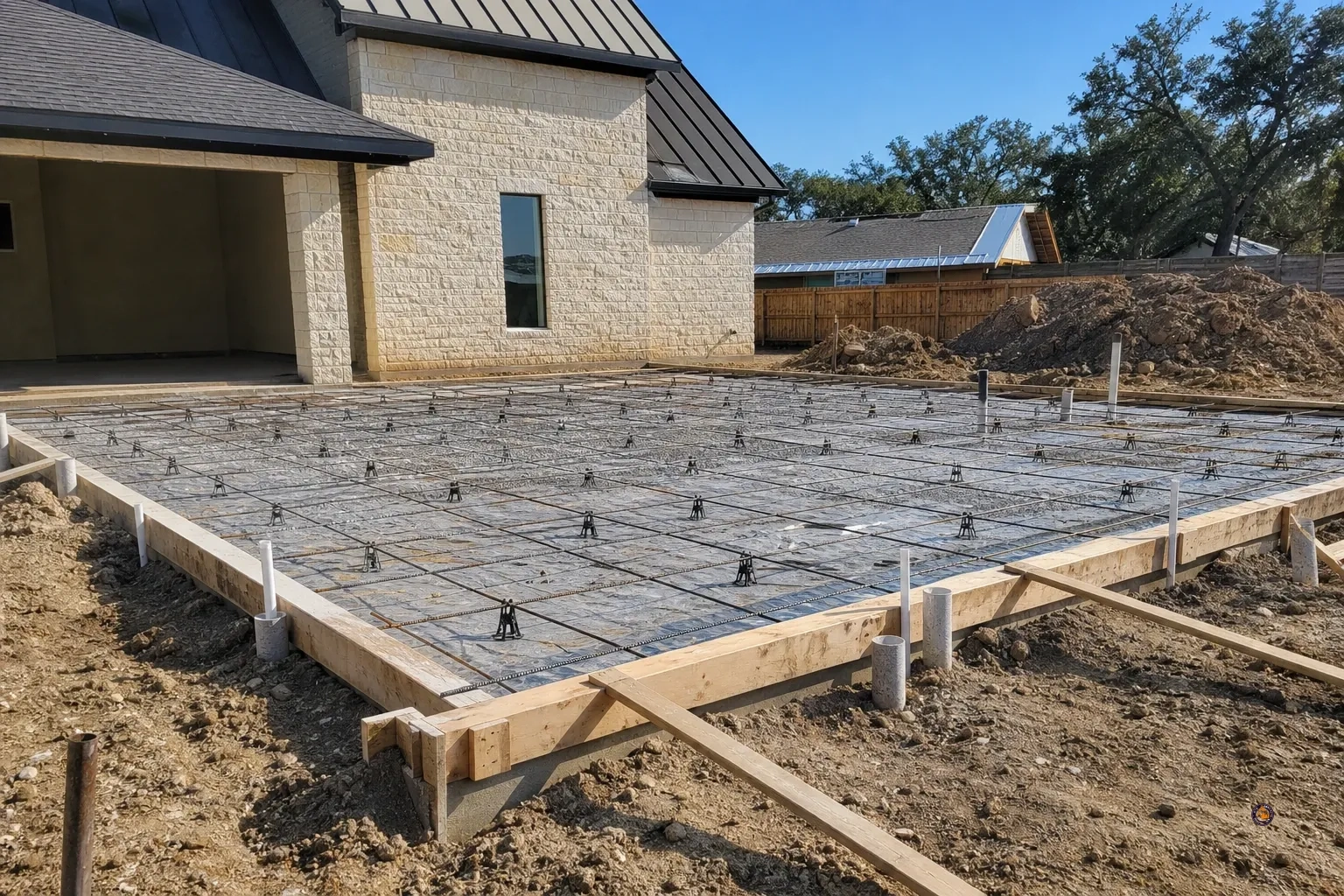
Before selecting a concrete contractor, ensure they detail the necessary prep work to avoid unexpected costs. Before you select a concrete contractor in Austin, ask them to spell out the slab preparation in writing. It is the fastest way to avoid surprise costs and to give your concrete a real chance to last.
Why the scope before the pour decides value
The lowest line on a bid is tempting. But most slab failures trace back to what did, or did not, happen in the days before the ready-mix truck arrived. Our earlier writing on this topic makes the same point: two prices that look close can hide very different jobs, especially on driveways, patios, and walkways. If you are comparing the lowest concrete bid Austin TX turns up in a search, compare scope before price so you know what will actually happen on your property.
On a slab project, “prep work” is not a generic step. It is a series of decisions and tasks that manage soil, water, and movement. Without that plan, the finish is just decoration.
What slab prep actually covers when it is done right
Use this as a lens for any quote you receive. You are not trying to become an engineer. You are asking each bidder to show their work.
Site assessment. How will access, grade, trees, existing flatwork, and neighboring structures affect demolition, formwork, and pour logistics?
Utility locating. Who is responsible for marking public and private utilities before excavation or demo? Demolition and haul-off. What is being removed, who hauls debris, and where does it go?
Subgrade correction. What base material is planned, how will it be compacted, and how will consistent support be verified without guessing? Drainage and slope. ACI guidance highlights drainage as a key consideration, so the bid should say how the slab will move water away from structures and avoid ponding.
Formwork and edges. How will forms be set and anchored so the slab finishes to clean, stable lines? Jointing plan. How will the new slab transition to existing slabs, steps, thresholds, or pavers to avoid lips and trip hazards?
Curing approach. What method is planned to retain moisture long enough for the concrete to gain strength? See ACI’s curing guidance. Environmental controls. Where will concrete washout be contained and managed so it does not enter soils or drains? If the project requires sawcutting an existing slab, creating joints, or coring for anchors or drains, who handles that work and how is dust controlled?
If a bid does not account for these items, it is not cheaper. It is just less complete.
For more background on how slab projects come together, see our in-depth overview in the Essential Guide to Concrete Slabs for Construction Projects.
The line items that separate a durable slab from an early callback
Here is what tends to vanish in the “too good to be true” number:
Clear responsibility for utility locating before excavation.
A plan for unsuitable subgrade. If the base is “as needed,” the scope is undefined. Jointing locations and method. A drawing or markup beats a promise to “cut later if needed.”. Drainage strategy. These are not optional and they protect both your property and the crew.
None of this requires a homeowner to dictate technical specifications. It only requires every bidder to show how they will manage the predictable risks of a slab.
How to compare two concrete bids in Austin by scope, not by slogan
When you ask for a “concrete company near me,” you will see a wide spread in numbers and promises. Use these questions to put competing bids on the same page:
Before the pour: What happens if the subgrade fails a visual or proof-roll check? How will that be communicated?
Where will water move after the slab is placed, and how is slope established in the forms? In the bid:
Are demolition, haul-off, and disposal included? Is base preparation named and measured, not left to “as needed”?
Are tie-ins to existing slabs or structures described? Are allowances or unit prices listed for uncertain conditions so changes do not become blank checks?
If you are planning a driveway replacement in Austin or a concrete patio installation in Buda TX, these same questions predict which proposal will hold up in the first hard rain and after a few summers of heat cycles.
For a deeper dive into causes and control of routine slab cracking, review our local explainer on why concrete cracks in Austin, TX.
The prep details that most influence slab performance
You do not need a universal thickness or reinforcement recipe to evaluate a plan. Focus on the steps that affect almost every slab:
Subgrade and base. The ground must be stable and consistent. If a bidder says “we will see on the day,” you have price exposure and quality risk.
- Water movement. Slabs need a destination for water. The detail matters most at garage thresholds, gates, and low corners.
- Joints where you will see them. A good jointing plan puts control joints where movement naturally wants to happen, often breaking up large rectangles and around re-entrant corners. If the only plan is a decorative stencil, you are buying looks, not control.
- Curing is not a formality. Concrete needs moisture retention early to gain strength reliably. ACI publishes entire manuals on curing for a reason. The approach should match your site and the season rather than hope for “clouds on pour day.”. Transitions. At sidewalks, driveways, and patios, the tie-in detail decides whether you get a clean flush surface or a lip that catches feet and mower wheels. Ask to see that detail on the drawing or scope.
If you want to go deeper on the role of base material under slabs, our short explainer on whether gravel is needed under concrete will help you ask smarter questions without turning your project into a DIY seminar.
Change orders you can predict and control
There are unknowns on most slab projects. That is normal. It becomes a problem only when the bid hides them. Ask bidders to list allowances or unit rates for:
Over-excavation and unsuitable soil removal beyond the typical depth.
Import of base material in specific units so you can do the math. Additional demolition if hidden layers are discovered.
Sawcutting beyond the planned control joints. Access constraints that require handwork or smaller equipment.
Clear allowances keep a “great deal” from becoming a running tab.
Retrofitting and cutting: where budgets blow up if the scope is vague
If your new slab ties into an existing one, expect sawcutting, edge prep, or coring for drains or anchors. These are specialized tasks with safety and dust-control implications. Get them into the base scope, not as “T&M later.” To understand how cutting tasks and dust controls affect price, see our breakdown on budget considerations in concrete cutting.
What you can verify on prep day without playing contractor
Homeowners and property managers do not need to run compaction tests or inspect mixes. A few simple observations go a long way:
Forms read level to the intended slope. Edges are straight, braced, and at a consistent height relative to finished grades and thresholds.
Base is uniform and firm underfoot, not pumping or visibly wet in pockets where the slab will sit. Control joint locations are marked or reviewed before finishing starts. The plan exists before the broom.
Washout area is set where it will not drain into soils or storm inlets. If sawcutting or demo is happening, you can see the dust control method that was discussed in the bid.
If you are unsure about anything you see, pause and ask for a quick field walk. A five-minute review before the pour is cheaper than a saw and patch after.
A note on who you hire, not just what you buy
ATX Concrete Contractor is a premier concrete contractor serving the greater Austin area, with over 15 years of experience and more than 500 projects completed at a reported 98 percent customer satisfaction rate. The company emphasizes high-quality materials, meticulous workmanship, and customer-focused service on residential and commercial slab work. They also offer free consultations and transparent pricing so you can compare scope before price with confidence. These are the traits you want from any team bidding your slab, whether you are building a backyard patio, extending parking, or planning a pool deck.
If you remember one thing as you compare bids: a bargain is only a bargain if the prep work is included, named, and priced clearly. That is how you turn a number on a page into a slab that looks good today and keeps doing its job for years.