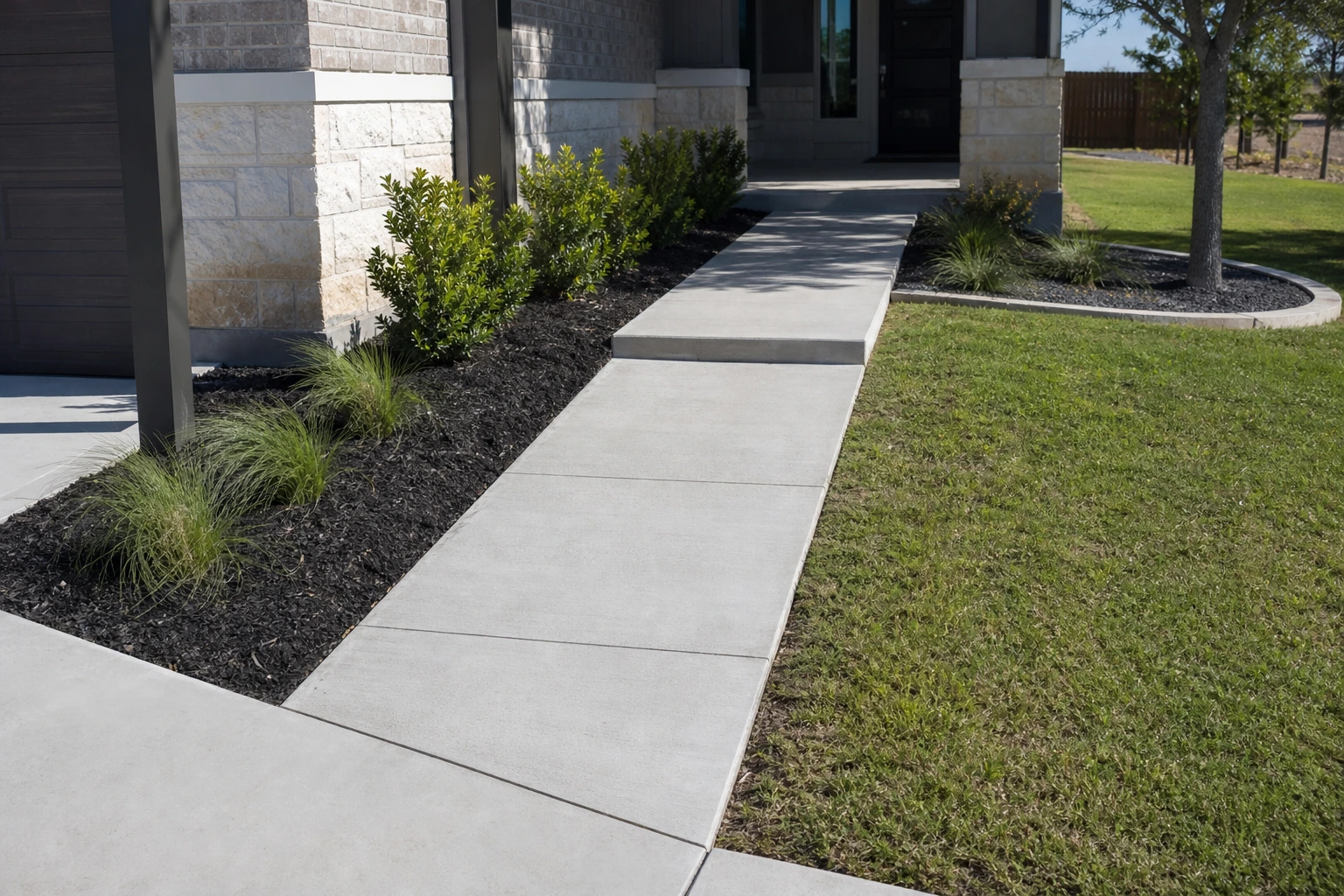
You’re eyeing a few concrete jobs before the holidays, but Austin’s winter swings, mild one week and cold and wet the next, make timing tricky. Winter concrete projects can still move fast here if you plan around short cold snaps and line up the right approvals early. November is often a good time to book driveway repairs, patio upgrades, and commercial floor polishing while schedules are still open before winter weather causes delays. This guide will help you decide what to tackle now, when to schedule it, and how to avoid weather or paperwork delays.
Austin winters: what really affects concrete work
Austin winters are mild, but we experience short cold snaps and wet fronts that significantly impact concrete work. Fresh concrete needs its mix, air, and surface above roughly 40 degrees Fahrenheit to hydrate properly. Many concrete companies in Austin will not start a pour unless the temperature is above this threshold. When a cold front approaches, a good crew adjusts the plan by using warmer mix water, non-chloride accelerators to speed up the set, and earlier start times.
Moisture is another critical factor. Rain or a saturated base can leave excess water at the slab surface or in the base, weakening the surface. Most crews monitor soil moisture and may delay work until the subgrade feels firm underfoot and does not show signs of water rising when stepped on. Finishing choices also shift with the weather. On cool, damp days, bleed water lingers, causing troweling to start later to avoid sealing in moisture. Curing is essential as well; blankets help retain heat, and curing compounds maintain moisture, allowing strength to build.
Driveway repairs and patio upgrades: timing is key
Tackle small problems now to prevent them from escalating during a cold snap. Issues like spalls (surface pits where paste has popped off), hairline cracks, and settled slabs that create trip lips should be addressed promptly. Water can exploit these flaws, and with temperature swings, it can worsen them. A good crew will assess the damage and determine the best fixes. For spalls, they may grind and patch with a polymer-modified repair mortar rated for exterior use. Trip hazards can be resolved through slabjacking or foam lifting, while failing sections may require saw-cutting and replacement after ensuring base support.
When considering repairs, it is essential that the base is firm and cracks are tight and stable. Replacement is a better option when the subgrade has washed out, multiple panels are moving, or rebar is exposed and rusting. Many homeowners start with concrete repair services to assess their driveways and plan before a cold snap.
Cool-season patio projects that work well in Austin include thin decorative overlays, full slab replacements, and stamped finishes. Overlays can refresh sound concrete, but the base must be solid, with no hollow spots, scaling, or active cracks. New slabs are typically 4 inches thick for standard patios, with thicker sections and reinforcement where loads are higher. Surface preparation is even more critical in cooler weather. A good contractor will degrease, pressure wash, grind the surface, and address cracks as required by the overlay system. For stamped work, contractors may use non-chloride accelerators and insulated blankets if cool weather could slow finishing and early curing.
Commercial projects: polishing and coatings during slower periods
When planning polishing for commercial spaces, schedule it during your slowest hours rather than your slowest week. A good crew will stage work in zones, closing only what is necessary and reopening areas as they are finished and cleaned. For small retail spaces, polished concrete typically requires 1 to 3 nights of downtime, scheduled after closing to minimize revenue loss. It is important to walk the space and map access, identifying clear paths to exits, restrooms, kitchens, and fire panels. Move gondolas and coolers the day before, and use blue tape to mark shelf feet for easy return.
Set clear expectations regarding power and floor protection. Polishing machines often require multiple 20-amp circuits or a temporary panel, and entrances may need floor protection to prevent tracking in wet conditions. If you are adding a guard, plan any final burnishing around the product directions. Phased scheduling helps reduce disruption during concrete polishing services.
Timeline and weather considerations: project durations and buffers
Plan around shorter days and the possibility of a quick cold front. Most contractors build a weather buffer into their schedules to account for delays caused by cold snaps or drizzle. Here’s a practical window for each job, including typical buffers:
- Driveway repair typically takes 1 to 3 days of on-site work, with 3 to 7 days of curing time. This may be extended if a cold snap slows strength gain.
- New or upgraded patios usually require 2 to 5 days of work, with 7 days of light use and 28 days for full curing. Stamped or overlay projects may add an extra day for detailing.
- Small retail polishing generally takes 1 to 3 nights, allowing for reopening the next morning.
In November, booking a few weeks ahead can help you secure a better weather window. Aim to schedule pours for the warmer part of the day, as cool mornings can slow finishing. If forecast lows dip into the 30s, plan for extra time since curing often slows even with common cold-weather protections. It is advisable to ask your contractor to hold a contingency day for sealing or saw-cutting joints if a front brings mist or high humidity.
Permits, HOA approvals, and utility locates: early planning is essential
Plan on three parallel tracks: permit checks, HOA reviews, and utility locates. In Austin and nearby cities, permits are often required when altering drainage, cutting curbs, changing driveway width at the sidewalk, adding a covered slab, or disturbing enough soil to meet local thresholds. A good contractor will sketch drainage paths, slab size, and any necessary steel or post-tension details for clearer review.
HOAs often require approval for visible work, such as driveway resurfacing patterns, new patios, and color changes. Most boards meet on fixed cycles, so approvals typically take 1 to 3 weeks; build this timeline into your start date. Order utility locates before excavation and any saw-cutting that could reach buried lines. Public locates for gas, electric, water, and telecom usually take 2 to 3 business days, while private lines like irrigation or pool equipment may take longer and require a private locator. A clear, written scope helps everyone align early on layout and access.
Cost drivers in winter: understanding budget changes
Winter does not automatically make concrete work pricier in Central Texas, but several factors can influence the budget. The scope of work sets the baseline; a small patch or grind is simpler than cutting out and replacing a whole panel, while stamping or staining adds labor steps. Access also matters; tight gates, uphill drives, or long wheelbarrow runs can slow a crew and may require small equipment.
Surface condition drives preparation time. Flaking spots, deep cracks, or oil-soaked areas need more cleaning, saw-cutting, and bonding work than a clean, sound slab. Add-ons can change the timeline and tools required; color hardeners, stamped patterns, decorative borders, joint sealants, or anti-slip textures each add steps and materials. Weather-related schedule protections usually add planning rather than waste. Most crews implement cold-weather measures only if the forecast calls for them, which may incur costs for warmer mix or set accelerators, blankets or windbreaks, and extra trips if rain interrupts finishing.
Checklist: your November planning steps, in order
Start by walking the site and taking photos to note cracks, chipped or flaking spots, trip hazards, drainage paths, and vehicle or grill placements. Measure areas accurately, recording length, width, and any thicker edges or steps so crews can size slabs and joints correctly. Gather your project goals and finishes, deciding between repair versus replacement, overlay versus new pour, and any color, stamp, or sealer type.
Check access and availability of power and water. Confirm gate widths, parking for a mixer or pump, and hose/electric availability for tools. Inquire about permits, as driveways tying into the street and new patios often need review; note submittal requirements. Start HOA approval by submitting drawings, colors, and finishes early, as review timing varies by community. Order utility locates, as public locates usually take 2 to 3 business days; plan extra time if private lines may be present.
Request and compare written scopes and schedules, looking for base preparation, reinforcement, planned joints to help control cracking, curing, and weather contingencies. Lock in dates and protect your calendar by allowing the typical on-site time and curing buffers discussed earlier. Finally, plan for surface protection after installation to keep vehicles off until cured, block pets, and stage plywood for crossings.
For related details, review Identifying Early Signs of Driveway Damage: A Homeowner’s Checklist for Austin Winters.
Ready to plan your winter project? Winter is a good window in Central Texas if you plan for cool snaps, HOA timing, and cure time before heavy use. Decide which project comes first, driveway touch-ups before a hard freeze, patio work during mild stretches, or off-hours polishing for quieter weeks, and pencil in target dates now. If you’d like help building a schedule that fits your site and budget, contact a contractor to discuss your needs. When you do, share a few phone photos, rough dimensions, access details, and any known issues like drainage or soil movement. Start here: contact ATX Concrete Contractor.