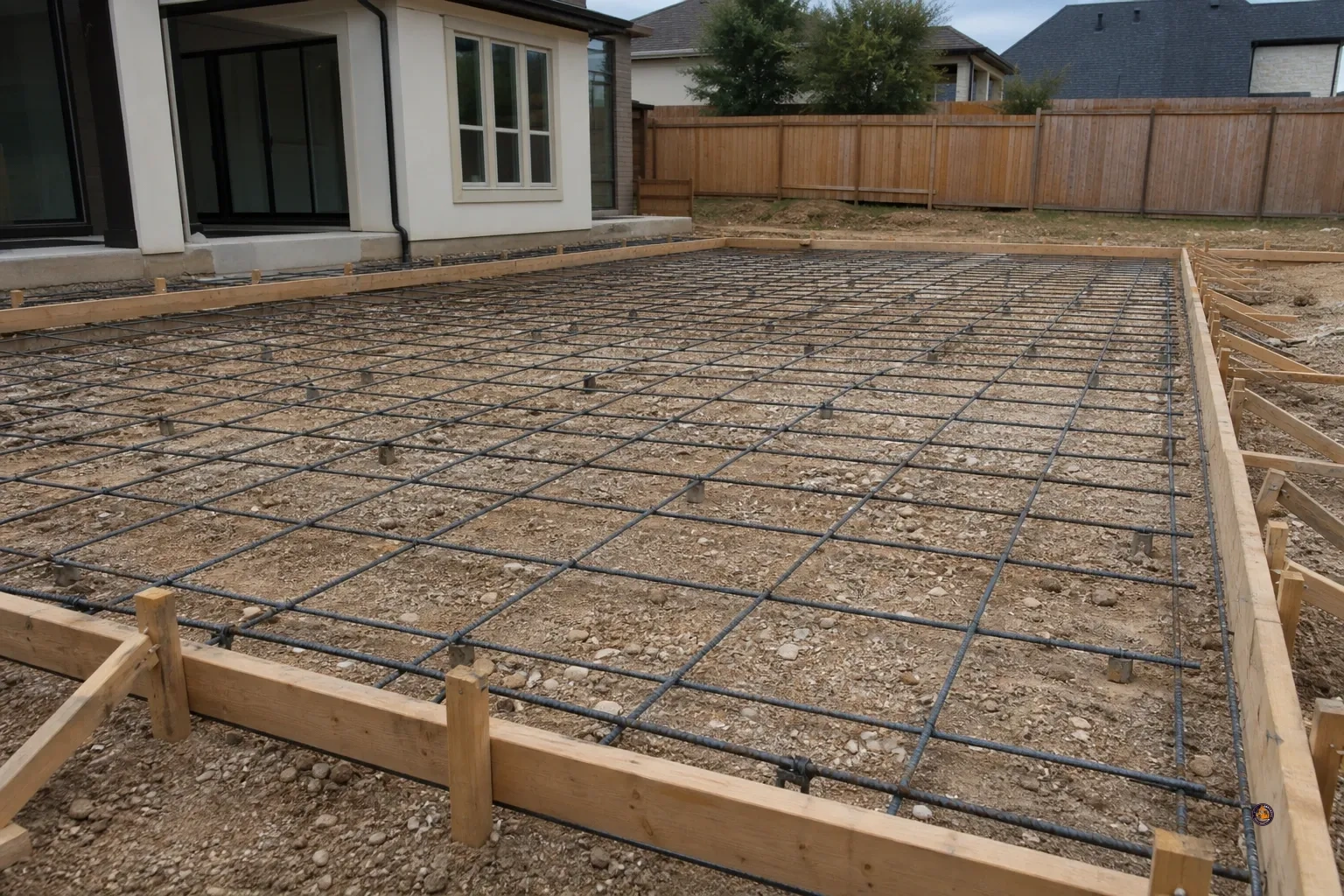
Before discussing any concrete solution, start every concrete conversation by looking at the soil and the base.
The myth to retire: “A smooth finish means a strong slab”
A troweled, glassy surface looks great on pour day. It tells you the crew cared about the last 30 minutes of work. It says nothing about the previous two days, which is where durability is won or lost. The fix is not a thicker slab or a higher-PSI mix. It is a base that is uniform, well-compacted, and drained.
Think of the base as the load path from your structure to the ground. Its job is not decorative. It must: Remove unsuitable material.
Topsoil, roots, and debris compress and decay. They do not belong under concrete. Provide uniform support.
A slab that sits on mixed conditions will move different amounts in different places. That is how cracks localize.
Manage water. Water that lingers under or beside a slab erodes fines, pumps under wheel loads, and changes support over time. Without density, the base will settle under service loads, even if the concrete itself is strong.
Bridge transitions. Utility trenches, backfilled edges, and cut/fill seams are classic weak lines. Treat them like the risk they are.
These are not cosmetic choices. They are the difference between a surface that stays usable and one that starts asking for attention in its first season.
Scope items to insist on before any pour in Austin
You are looking for clarity, not universal numbers: What is being removed and to what depth before base placement. Where water will go after grading and how that ties into existing site drainage.
The type of base material, where it will be placed, and how compaction will be verified. How soft spots, utility trenches, and edges will be stabilized so they do not become settlement lines.
How the prepared base will be protected if rain hits before the pour. Where control joints are planned relative to re-entrant corners, openings, and changes in thickness. Joints do not replace a good base, but they work best with one.
“Is gravel needed?” and other base questions
What you want is a base that drains and stays dense under load, using materials and methods suited to the site. Our explainer, Is gravel needed under concrete, walks through the decision factors so you can have a precise conversation instead of a yes/no debate.
Why this matters for more than foundations
We see it when someone calls about concrete driveway repair near Round Rock. The patch might hold, but if the trench beneath the tire path was never compacted correctly, new cracks will follow the same seam. Likewise, whether you are comparing concrete patio installation Round Rock TX options or planning concrete patio installation Buda TX or concrete patio installation Hutto TX, the finish pattern and color will not overcome a base that traps water or varies from soft to stiff across the slab.
Price checks that protect you
Compare scope before price. If two proposals differ in cost, the missing base details usually explain the gap.
One more reality check
Then choose the finish that fits how you live day to day.
For related details, review Essential Guide to Preparing Concrete for Austin's Spring Weather.
Everything above it depends on that choice.