A homeowner in Austin calls us after noticing cracks snaking across their living room floor just two years after their new home was built. The culprit? A foundation that looked solid on the surface, but hid a series of avoidable mistakes underneath. Stories like this are why we believe the real work of installing a concrete foundation isn’t just about pouring concrete, it’s about the thousands of judgment calls, local insights, and quiet protections built into every step. If you want a stable home in Austin, avoiding common pitfalls during concrete foundation installation isn’t optional, it’s essential.
Why Foundations in Austin Demand Extra Attention
Austin’s soil isn’t like the stable grounds you’ll find in other parts of Texas. It’s a patchwork of expansive clay, limestone, and shifting moisture levels. One week, the ground is bone-dry; the next, it soaks up rain and swells. This constant movement means that what works for a foundation in one Austin neighborhood may fail just a few miles away. That’s why we never use a cookie-cutter approach. Every foundation project starts with a deep dive into the specific soil conditions on your lot, not just a glance at city maps.
What most people never see is the time we spend studying the ground before we ever order concrete. We conduct soil tests, review neighborhood history, and sometimes even consult with engineers who know Austin’s quirks inside and out. This early work is the difference between a foundation that cracks and one that lasts for decades. For a closer look at how soil impacts your project, our Essential Guide to Concrete Foundations for Home Stability covers these local challenges in detail.
The Hidden Risks of Rushing Site Preparation
You’d be surprised how many foundation problems trace back to what happened before the first concrete truck ever arrived. We’ve seen builders try to save time by skipping key steps in site prep, compacting fill soil too quickly, ignoring drainage patterns, or failing to remove organic material from the build site.
In Austin, missing even one of these steps can spell disaster. For example, if the base layer isn’t compacted properly, the ground may settle unevenly once the weight of the house is added. This settlement often leads to cracks in the slab, uneven floors, and doors that refuse to close. We make it a rule never to pour a foundation until we’ve personally verified the compaction and moisture levels are just right. It’s not glamorous work, but it’s the kind of detail that saves homeowners from expensive repairs later.
Precision in Formwork and Reinforcement
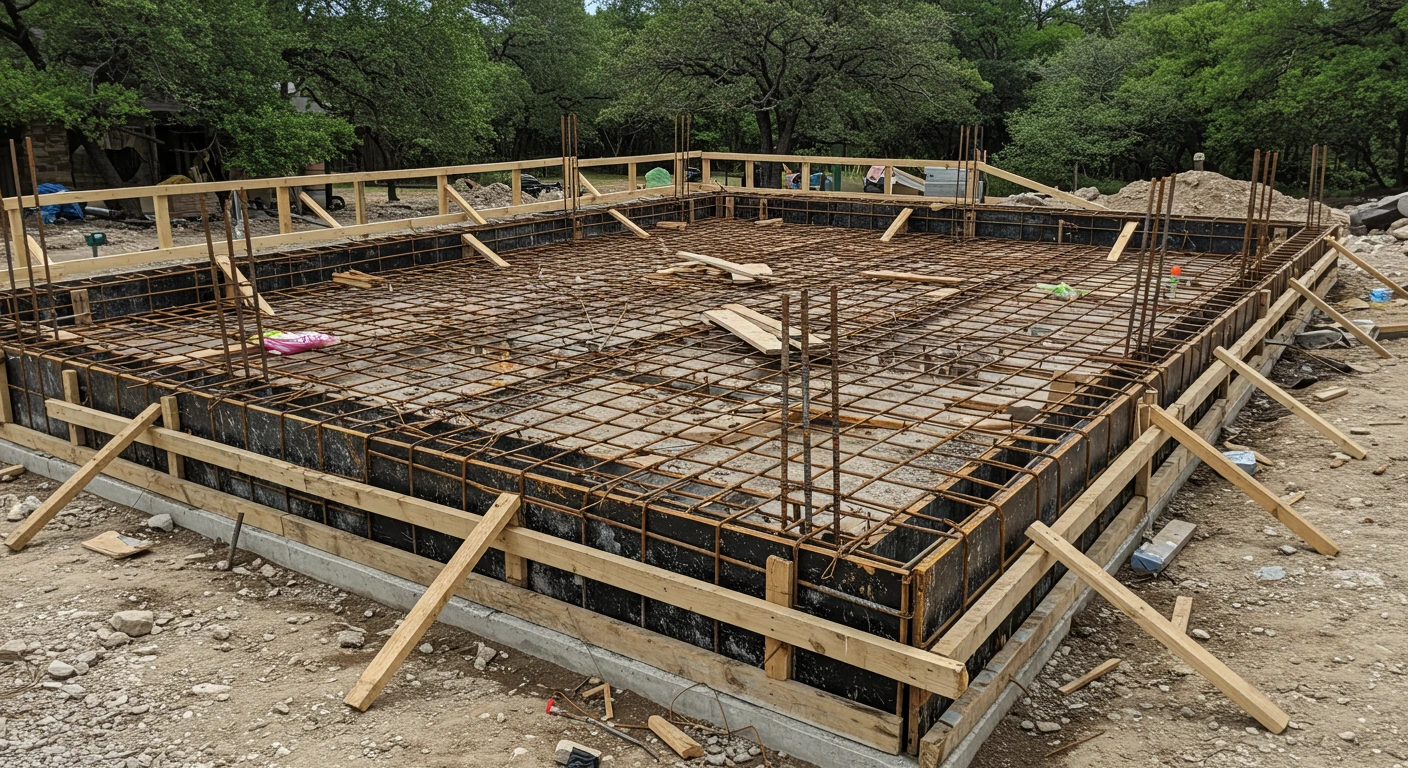
Formwork, the wooden or metal molds that shape the concrete as it cures, might seem like a minor detail, but it’s actually a critical part of the process. If the forms are even slightly out of alignment, the entire foundation can end up uneven, causing problems throughout the house. We routinely double-check measurements and use laser levels to ensure everything is anchored perfectly before a single drop of concrete is poured.
Reinforcement gets equal scrutiny. Austin’s shifting soils demand more than the minimum code when it comes to rebar or post-tension cables. We design reinforcement layouts specifically for your site’s soil type and load requirements. Skimping here is tempting for some contractors looking to cut costs, but we’ve repaired enough failed slabs to know that saving a few dollars on steel always costs more in the end.
Timing and Weather: The Art of the Pour
Most people assume that pouring concrete is as simple as scheduling a truck and letting the crew do their work. In reality, the timing of a pour is a delicate dance with Austin’s unpredictable weather. Pouring during a heatwave or just before a thunderstorm can compromise the entire project. We track weather patterns obsessively and sometimes reschedule at the last minute to avoid a bad outcome.
During the pour, we watch the consistency of the mix like hawks. Too much water and the slab will be weak; too little, and it won’t flow into every corner of the formwork. Our crew is trained to adjust on the fly, adding or holding back water as needed, and working quickly to ensure the surface is properly finished before the Texas sun starts to dry things out unevenly.
Curing: The Silent Protector
The curing process is where many foundations are quietly set up to fail. Rushed schedules often mean builders move on too soon, exposing fresh concrete to the elements before it has reached its full strength. We treat curing as a critical phase, protecting the slab with coverings, misting it as needed to prevent rapid drying, and monitoring temperatures closely.
A well-cured foundation resists cracking and stands up to Austin’s seasonal swings in moisture. We never cut this process short, even if it means coming back on weekends or after hours to check on your project. For homeowners curious about the science behind this phase, our Building Blocks: The Importance of a Properly Poured Concrete Foundation goes deeper into why patience here pays off for decades to come.
Communication: The Invisible Ingredient
One thing clients rarely see is the constant back-and-forth between our crew, engineers, suppliers, and city inspectors. Every change in soil condition, weather, or project scope is communicated in real-time. This level of detail prevents mistakes from being buried until they become problems. If an unexpected rainstorm washes out part of the site prep, we don’t just patch and move forward, we reassess and, if needed, redo critical steps. It’s this approach that keeps surprises to a minimum and ensures you get the foundation you paid for.
Real-World Lessons from Austin Homes
We’ve been called in to rescue houses that suffered from rushed foundation work: homes where the builder skipped a soil test, poured concrete on a rainy day, or tried to cut corners with reinforcement. In every case, the repair costs were several times higher than what it would have cost to do the job right from the beginning.
That’s why our process is designed to be transparent and methodical. We invite homeowners to see the work at each stage, explain the reasoning behind every decision, and share updates so you know what’s happening behind the scenes. If you want to learn more about the types of residential concrete work that add both beauty and stability, our guide to residential concrete services offers insights into the full range of options available in Austin.
What You Can Do as a Homeowner
While so much of the work happens on our end, you play a vital role in avoiding foundation pitfalls. Ask questions about soil testing, reinforcement, and curing. Make sure you understand the timeline and why certain steps matter. Insist on seeing proof of proper site prep and don’t accept rushed schedules. The best results come from a partnership where both sides are invested in getting the details right.
Building a solid foundation in Austin isn’t about luck, it’s about diligence, experience, and an eye for the details hidden beneath the surface. If you’re planning a new build or concerned about the stability of your home, reach out to us. We’re here to make sure your foundation is something you never have to think about again, because it was done right the first time.