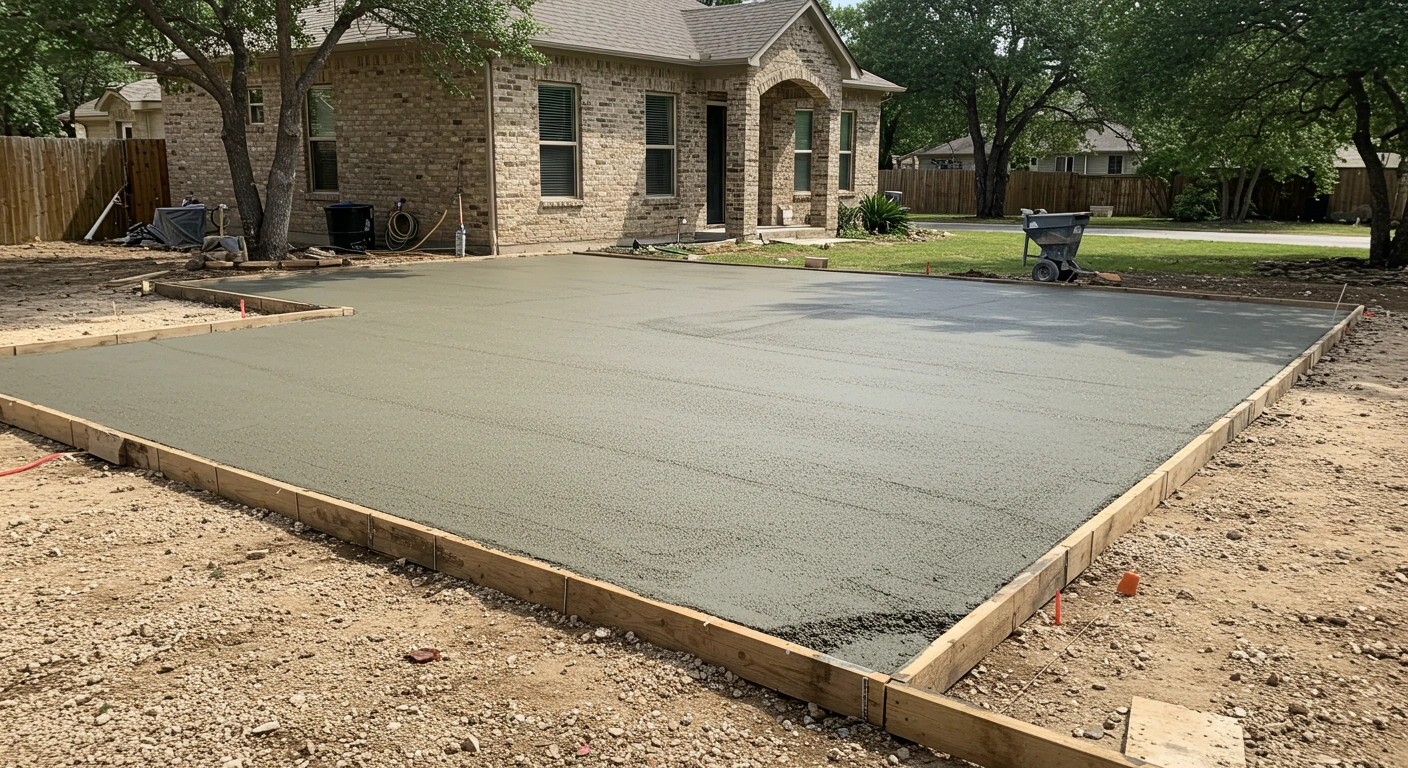
A homeowner calls us, worried about a “hairline crack” in their new foundation. They’ve heard a neighbor’s horror story about sinking floors, or maybe a friend’s advice that all concrete is the same. In Austin, where the soil shifts and the weather swings from drought to downpour, myths about concrete foundations seem to spread faster than the cracks themselves. If you’re making decisions about your home’s stability, you deserve facts, not folklore. Let’s set the record straight on the most common misconceptions we hear from Austin homeowners about concrete foundations.
Not All Concrete Foundations Are the Same
It’s a common assumption: concrete is concrete, so any foundation poured in Austin should work just fine. The reality is that our region’s expansive clay soils, irregular rainfall, and extreme temperature swings demand a highly tailored approach. We’ve seen foundations fail prematurely because a builder used a “one-size-fits-all” slab designed for a different part of Texas. Over the years, we’ve adjusted our mix designs, reinforcement strategies, and installation methods to fit the unique conditions in Central Texas. If you’re comparing bids, ask how each contractor accounts for Austin’s soil, generic answers should be a red flag.
For a deeper look at how these differences matter, our Essential Guide to Concrete Foundations for Home Stability explains why regional expertise is crucial.
Cracks Always Mean Structural Failure, Or Do They?
Few things make a homeowner more anxious than spotting a crack in their foundation. The myth that “any crack means structural doom” can cause unnecessary panic, and sometimes, lead to expensive and unnecessary repairs. The truth is, concrete almost always develops some minor surface cracks as it cures and responds to seasonal changes in moisture and temperature.
We differentiate between harmless “hairline” cracks caused by shrinkage and more serious movement-related cracks. The width, direction, and location of a crack matter far more than its mere existence. Most shallow cracks under 1/8 inch wide are purely cosmetic. However, stair-step cracks in brick, wide gaps, or cracks that grow rapidly deserve a professional assessment. Our job is to help you distinguish between normal aging and true warning signs. For more on this, see our guide to why concrete cracks in Austin.
Concrete Foundations Are Maintenance-Free
Another misleading belief is that once your foundation is poured, you can forget about it forever. While concrete is incredibly durable, Austin’s climate and soil can test even the best-built foundations over time. Without proper drainage, tree root management, and occasional inspections, small issues can quietly develop into bigger ones.
We encourage homeowners to perform annual checks for pooling water near the foundation, soil erosion, and new or changing cracks. Simple steps like installing gutters, maintaining proper slope, and managing landscaping can add decades to your foundation’s life. Ignoring these basics often leads to preventable repairs that cost far more down the road.
All Foundation Problems Are Caused by Bad Concrete
When a foundation issue arises, concrete often gets the blame. In reality, foundation problems usually result from a combination of factors, with soil movement at the top of the list in Austin. Poor site preparation, inadequate drainage, and even plumbing leaks can all cause movement beneath the slab, leading to uneven settling or cracking.
We’ve repaired foundations where the concrete itself was perfectly mixed and poured, but shifting clay or excessive moisture undermined the structure. Our approach is holistic: we assess not just the slab, but the soil, drainage, and nearby landscaping to find the true root of an issue.
Thicker Foundations Are Always Better
It seems logical to assume that a thicker slab means a stronger, longer-lasting foundation. But in practice, thickness is just one part of the equation. Overbuilding by pouring an excessively thick slab won’t compensate for poor soil prep or lack of reinforcement. In fact, unnecessary thickness can introduce its own issues, like shrinkage cracks or added weight on unstable subsoil.
We focus on the right balance of thickness, reinforcement (such as rebar or post-tension cables), and proper site preparation. Our goal is a foundation matched to the site’s specific requirements, not just more concrete for the sake of it.
Foundation Repairs Are Always a Sign of Poor Construction
Many homeowners fear that needing a foundation repair means their house was badly built. In Austin, even well-constructed homes may need minor adjustments or repairs after years of soil movement and weather extremes. The important thing is how quickly and effectively these issues are addressed. We stand behind our work with warranties and transparent communication, and we always educate homeowners about realistic expectations in our climate.
You Can Judge Foundation Quality by Appearance Alone
A fresh, flawless-looking slab can hide serious problems beneath the surface. We’ve seen beautiful-looking driveways and patios that began to settle within a year because the subbase was poorly compacted or the mix wasn’t right for local conditions. At the same time, a perfectly functional foundation might have harmless surface discolorations or minor cracks that don’t affect structural integrity.
We encourage homeowners to look beyond appearances and ask about the process: Was the soil tested? Was the reinforcement inspected? Was the concrete mix designed for Austin’s climate? These questions matter far more than a smooth surface.
DIY Foundation Work is a Good Way to Save Money
With online tutorials just a click away, some homeowners are tempted to tackle small foundation projects themselves. While DIY is great for many home upgrades, concrete foundation work is rarely one of them. Mistakes in site prep, mix ratios, or reinforcement can lead to problems that cost much more to fix than having hired a professional from the start. Even a small misstep, like failing to account for the expansion of Austin clay, can shorten your foundation’s lifespan dramatically.
If you’d like to learn more about the difference professional installation makes, our Building Blocks: The Importance of a Properly Poured Concrete Foundation article offers a behind-the-scenes look at our standards and process.
What This Means for Austin Homeowners
Myths about concrete foundations can cost you peace of mind, time, and money. In Austin, the right foundation starts with local expertise, honest communication, and a clear understanding of both concrete and soil science. If you’re planning a new project or have questions about an existing foundation, we’re here to help you sort fact from fiction. Let’s build your home on knowledge, and a foundation built to last. Have questions or want to schedule a free consultation? Reach out to us anytime, and let’s make sure your next step is a solid one.