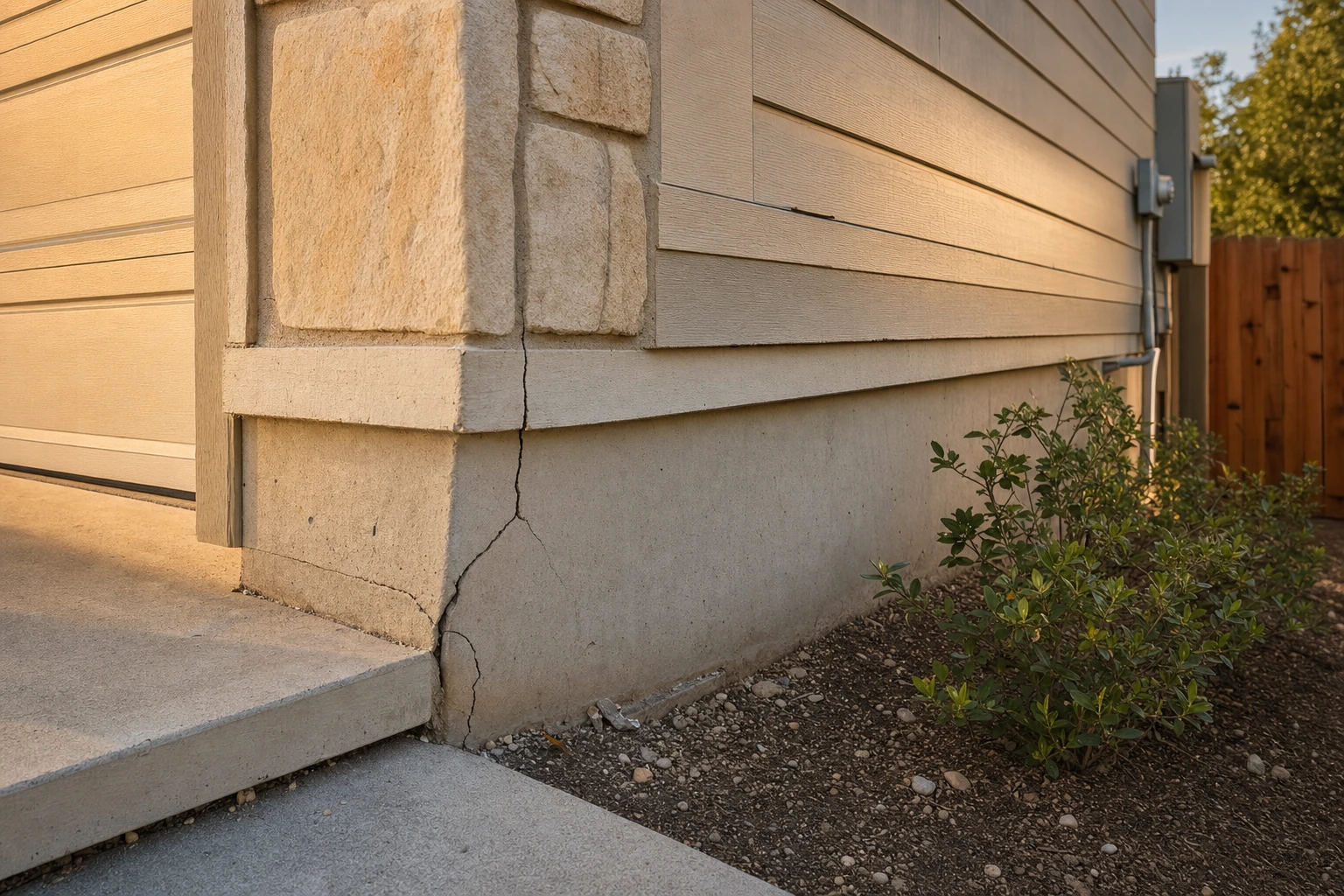
The first crack was barely visible, a thin line near the corner of the living room, easy to miss behind the baseboard. For months, the homeowner walked past it, thinking little of the change. By the time the front door started sticking and a hairline fracture appeared along the ceiling, the real issue had already taken hold beneath the surface. In Austin, this is the most common and costly mistake we see: ignoring those early, subtle signs of foundation problems, hoping they’ll resolve themselves, or assuming they’re nothing to worry about.
The Critical Mistake Most Homeowners Make
We see it time and again: small cracks, slight floor sloping, or a window that suddenly won’t shut flush. In our experience, most people delay action because they underestimate the seriousness, chalk it up to “normal settling,” or worry about repair costs. The belief that foundation problems will stay minor, or that they’re just part of living in Central Texas, can lead to far greater expenses and headaches down the road.
In Austin’s soil, which shifts dramatically between seasons, those tiny warning signs rarely go away on their own. Waiting to address them doesn’t just risk a bigger repair bill, it can threaten the safety and stability of your entire home. The longer you wait, the more likely it is that the problem will grow, causing more damage to walls, floors, plumbing, and even your property’s value.
Why Foundation Problems Escalate So Quickly in Austin
Our region’s unique geology is both the beauty and the bane of local homeowners. Austin sits atop expansive clay soils that shrink during droughts and swell after heavy rains. This constant movement is tough on foundations. What starts as a hairline crack in March can become a deep fissure by August, especially if the summer is dry and then followed by sudden rainstorms.
When you ignore those early signs, like doors that don’t latch, cracks above windows, or floors that feel uneven, you’re giving the soil more time to move and put pressure on your foundation. Water intrusion can worsen the damage, eroding support underneath and creating pockets that lead to further settling. By the time visible symptoms worsen, the repair often requires more invasive and costly solutions, such as underpinning or partial foundation replacement.
Spotting Early Signs: What Most People Overlook
We get a lot of calls from Austin homeowners after the symptoms become impossible to ignore. But most repairs could have been much simpler, and less expensive, if addressed sooner. Here are some of the most frequently overlooked early signs of foundation problems in Austin:
- Hairline cracks in interior or exterior walls, especially around windows and doors.
- Sticky doors and windows that suddenly don’t open or close properly.
- Uneven or sloping floors that feel off when you walk across a room.
- Gaps between walls and ceilings or between bricks and mortar.
- Separation of cabinets or counters from the wall.
- Moisture in crawl spaces or around the base of the home after rain.
Ignoring these warning signs can give minor issues the chance to escalate into major structural damage. For a deeper dive into spotting these issues, our Essential Guide to Concrete Foundations for Home Stability explains in detail how each sign connects to underlying foundation movement.
Why Homeowners Delay, and Why That’s Risky
It’s natural to hope a small crack is just cosmetic. Many Austin homeowners put off calling a professional because they fear a sales pitch or a recommendation for expensive repairs when only monitoring or basic preventative maintenance is needed. Others are simply busy and don’t realize that foundation movement can accelerate quickly, especially during droughts or after heavy rain.
But here’s the risk: foundation problems rarely remain static. Every additional season of movement means more shifting, more cracks, and mounting pressure on your home’s structure. The cost of a minor repair, such as injecting epoxy into a small crack or improving drainage, can be a fraction of what a major repair will cost if you wait. In fact, we’ve seen foundation repair bills jump from $800 for an early fix to over $15,000 for homes where the warning signs were ignored for too long.
The Real Cost of Waiting: More Than Money
The financial aspect is just one part of the story. Unattended foundation issues can lead to:
- Decreased home value: Buyers are wary of homes with visible foundation damage or a history of major repairs.
- Higher utility bills: Gaps in the structure let air and moisture making it harder to heat and cool your home efficiently.
- Plumbing problems: Foundation movement often leads to broken pipes or leaks under the slab, which are expensive to fix and can cause additional foundation movement.
- Safety concerns: In severe cases, shifting foundations can cause significant structural instability, putting your family at risk.
If you need help differentiating between minor cosmetic cracks and genuine foundation problems, our Repair or Replace Cracked Concrete - Austin 2026 Cost Guide offers practical advice and real-world cost examples.
How to Respond: Steps to Avoid the Most Common Mistake
Here’s the approach we recommend to every Austin homeowner:
- Pay close attention to changes: Walk your property inside and out every few months. Take note of any new cracks, doors that stick, or visible gaps.
- Document early signs: Snap photos and jot down dates when you notice changes. This helps track if issues grow over time.
- Don’t wait for a “bad year”: Even if you think the movement is seasonal, call a professional at the first signs. An inspection is far less costly than a major repair.
- Choose a local expert: Austin’s soil is unique, and so is the climate. We know what to look for and how to address early warning signs specific to our region.
- Act on recommendations: Small fixes, like improving drainage or sealing minor cracks, can prevent much bigger problems.
If you want to learn more about what a thorough foundation inspection involves, our Blueprint for Stability: The Importance of a Skilled Foundation Engineer highlights the value of professional expertise.
Proactive Foundation Care Pays Off
The most expensive foundation repairs we handle almost always start with early warning signs that were ignored. It’s a tough lesson, but one you don’t have to learn the hard way. By catching and addressing issues early, you protect your home’s value, avoid costly repairs, and gain peace of mind, knowing your foundation is solid for years to come.
If you’ve noticed even minor cracks or odd shifts in your Austin home, don’t make the common mistake of waiting. Reach out for an expert assessment, and let’s keep your foundation strong and your investment secure. What’s the small detail in your home you’ve been ignoring? It could be the first clue to keeping your biggest investment safe.