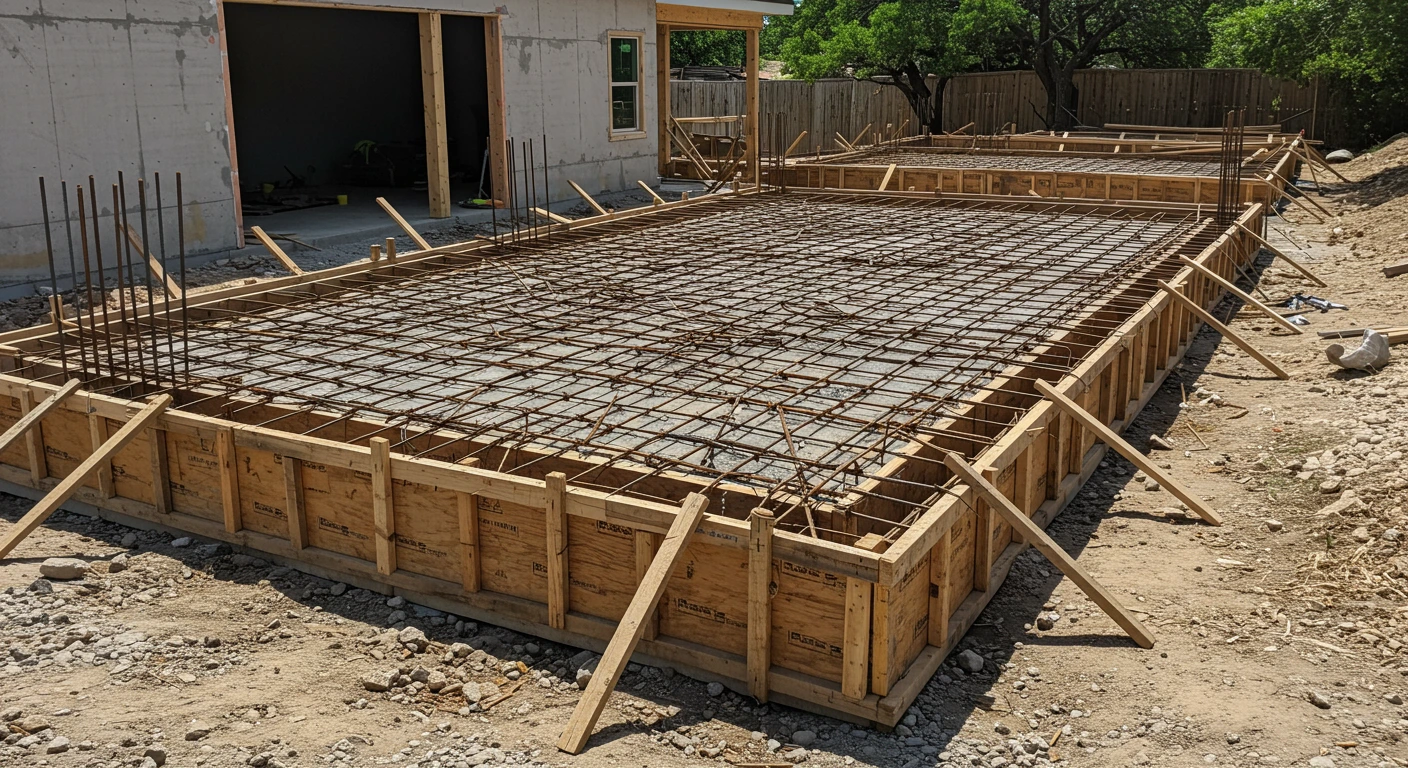
A homeowner in Austin calls us, worried about hairline cracks spreading across their brand-new foundation. They’d heard that “concrete is strong enough on its own” and reinforcement is just an upsell, until real problems started to show. This misconception is more common than you might think, and it can lead to costly repairs and structural headaches down the road. Let’s set the record straight: reinforcement isn’t optional for concrete foundations in Austin. It’s essential.
Why the Myth Persists: “Concrete Is Strong Enough on Its Own”
The idea that concrete alone is enough to support a home is rooted in a basic truth: concrete does have impressive compressive strength. It can bear a lot of weight from above, which is why it’s been used in construction for centuries. But here’s what most people don’t realize, concrete is naturally brittle and doesn’t handle tension or movement well. In other words, it cracks under pressure from the sides or from soil shifts, which are all too common in Central Texas.
Unfortunately, we still hear from clients who’ve been told by less experienced contractors or DIY forums that reinforcement is overkill. This advice ignores the reality of our Austin soil, unpredictable weather, and the science behind how concrete actually behaves. If you want your foundation to last, reinforcement is not just a “nice-to-have”, it’s a must.
The Real Role of Reinforcement in Concrete Foundations
Reinforcement is about making concrete perform where it would otherwise fail. We use steel rebar, welded wire mesh, or sometimes specialized fibers, embedding them in the concrete before it sets. These materials “tie” the concrete together, helping it resist cracking, bending, and shifting. In the world of foundation work, this is about more than just passing a code inspection, it’s about real, long-term stability.
In Austin, where we see everything from clay soils that swell and shrink with moisture, to sudden temperature drops and intense heat, stress on a foundation is a given. Reinforcement acts like the skeleton inside your foundation, holding it together as the ground moves, temperatures fluctuate, and your home settles over time. Without it, even the best-mixed concrete can develop cracks, lose strength, or even fail completely in extreme cases.
Understanding Local Conditions: Why Austin Foundations Need Extra Care
Our region’s soils are notorious for movement. Expansive clay absorbs water and grows, then dries out and shrinks. This constant cycle can pull and push on foundations, creating tension that plain concrete simply can’t handle. That’s why local building codes in Austin require reinforcement in virtually every new foundation, and why we always recommend it, even for small additions or patios.
We’ve seen what happens when reinforcement is skipped or installed incorrectly. Cracks that start harmless can spread, doors and windows start sticking, and in the worst cases, entire slabs can tilt or break apart. Repairing an under-reinforced foundation is far more expensive than doing it right from the start.
On our concrete foundations guide, we break down the different types of foundations and the unique challenges posed by Austin’s geology. The takeaway is always the same: reinforcement isn’t a luxury. It’s a necessity for any concrete foundation that needs to stand the test of time in Central Texas.
Common Misconceptions About Reinforcement, And the Facts
We hear a lot of myths about reinforcement in our line of work. Here are a few that come up the most, with the truth behind them:
- “Concrete is thick enough, rebar is just extra.” Thickness helps, but it’s not enough. Without reinforcement, thick concrete can still crack due to soil movement or thermal changes.
- “Wire mesh is only for driveways, not actual foundations.” Wire mesh improves crack resistance in slabs, but for foundations, rebar is typically required by code for its superior tensile strength. We sometimes use both, depending on the design and soil conditions.
- “If I don’t see cracks right away, I’m fine.” Many foundation cracks develop slowly, sometimes taking years to show up. Reinforcement works behind the scenes to prevent these issues long before they’re visible.
- “Reinforcement is only needed for big buildings.” Even small homes, garages, or additions in Austin need reinforcement. The soil doesn’t care how large your project is, movement affects every structure.
For a closer look at what happens when foundations aren’t properly reinforced, read our story on common concrete installation mistakes and see how we help homeowners recover from avoidable damage.
How We Reinforce Foundations for Austin’s Unique Needs
Every foundation project we take on starts with a thorough soil assessment. We determine the right type of reinforcement based on the site’s specific challenges, expansive clay, sloped lots, or areas prone to flooding. Our standard process typically involves:
- Placing steel rebar in a carefully designed grid, sized and spaced according to engineering specs and code requirements.
- Using welded wire mesh in slabs for additional crack resistance, especially in garages or driveways.
- Installing extra reinforcement around load-bearing walls, corners, and points where pipes or utility lines pass through the slab.
- Adding fiber reinforcement for certain applications to improve resistance to surface cracks and shrinkage.
We don’t rely on guesswork. Our experience with over 500 local projects means we know how to tailor reinforcement to fit Austin’s microclimates, neighborhood soil profiles, and even the quirks of specific subdivisions. And we’re always happy to show you the plans and explain the reasoning, because an informed customer is a confident customer.
What Happens If You Skip Reinforcement?
Think of reinforcement as your foundation’s insurance policy. Without it, you’re gambling with the most important part of your home. Foundation repairs can cost tens of thousands of dollars and create long-term headaches for resale value and peace of mind.
We’ve been called in to fix homes where the original builders tried to save a few bucks by skimping on reinforcement. The result? Cracks in the slab, shifting floors, water intrusion, and sometimes extensive structural repairs that could have been avoided entirely. If you want a foundation that lasts for decades, not just a few years, there’s no cutting corners.
If you’re wondering what to look for in a foundation contractor, our behind-the-scenes look at foundation construction explains how we handle reinforcement step by step, from planning to pour.
Reinforcement Is Not Optional, It’s the Foundation of Confidence
The myth that “concrete is enough” puts Austin homeowners at risk of expensive repairs and structural headaches. Reinforcement isn’t just a line item on your bid, it’s the difference between a foundation that shrugs off Texas weather and one that starts to crumble when the next drought or storm hits.
Building in Austin means respecting our soil, climate, and building codes. We believe an honest conversation about reinforcement is the first sign you’ve found a contractor who cares about your long-term satisfaction, not just a quick job. If you have questions about your foundation or want to see how reinforcement fits into your project, let’s talk. Your home deserves a foundation built for Austin’s future, and that starts with getting the essentials right from the ground up.
Atxconcretecontractor.com