A concrete project scope must clearly outline site conditions, the exact tasks to be performed, and the results and responsibilities you expect. That clarity is what keeps your Austin project predictable on schedule and on budget.
The mistake that inflates costs: comparing prices before comparing scopes
The most common error we see is choosing a number without reading what the number includes. Two bids that look close can hide very different assumptions about access, demolition, subgrade correction, joint layout, drainage handling, and post-pour responsibilities. That is how a “deal” becomes costly rework or add-ons.
If you take one thing from this post, make it this: compare scopes line by line before you compare totals. Then you can make an informed call on value, not just price.
What a complete scope should explain before anyone mobilizes
Every reliable concrete scope answers three groups of questions in plain language: site realities, the precise tasks to be performed, and the outcomes and responsibilities expected. Here is how to read for each.
Site realities: write down the ground truth
Your site sets the limits long before the truck arrives. Ask that the scope explicitly name: Access and staging. How will crews and materials reach the work area? Is a pump truck assumed or wheelbarrow runs? Which surfaces will be crossed and protected? Drainage and water movement. After rain or a hose-down, where does water collect and where does it exit? How will new work avoid creating ponds at edges or against structures?
Existing conditions. Notes on soil firmness, vegetation, roots, nearby fences or pools, and any structures or slabs to tie into or protect. Utility locates and irrigation. Who calls for public locates? Who exposes private lines and repairs any irrigation that must be cut and capped?
Concrete washout and cleanup. Where washout will be contained and who is responsible for haul-off and final sweep or rinse. Working hours and neighbor coordination. Start times, noise windows, and any HOA notices if applicable.
If your project involves cutting or coring into existing concrete, ask how dust and slurry will be contained and cleaned up. For occupied homes or businesses, that single line item can make the difference between a smooth day and a mess.
The exact tasks: no vague verbs
A solid scope calls each task by name and connects it to a location and an expected outcome. At minimum, look for: Demolition and haul-off. If old concrete or pavers are being removed, the scope should identify thickness assumptions, break-and-load method, and destination of debris. For a primer on what this entails, see our explainer on the concrete demolition process. Subgrade evaluation and correction. Weak spots or organics must be removed and replaced. If the scope says “prep subgrade,” ask how corrections will be identified and priced if quantities change.
Base installation and compaction. If a base layer is included, the scope should name the material and compaction approach. If you are debating whether a base is necessary for your project, our guide on whether gravel is needed under concrete outlines the considerations to discuss. Formwork and edges. What form materials will be used, where edges will align, and how transitions meet existing grades or thresholds.
Reinforcement when specified. If a designer or engineer has called for reinforcement, the scope should reflect the plan by reference, not by guesswork. Pour method and access plan. Direct chute, buggy, or pump. If a pump is assumed, confirm who provides it and where it will set up.
Finish and appearance. Define the texture or sheen, any trowel or broom direction, and any decorative pattern, color, or border, along with how samples or mock-ups will be approved. Joints and sawcut timing. Show joint layout on a simple sketch and specify who performs saw cuts and within what time window after placement.
Cleanup and site protection. What surfaces will be protected during work and what the crew will restore or reseed after demobilization.
If the work includes cutting and core drilling, the scope should show locations on a plan, list approximate diameters or lengths, state whether penetrations require patching, and specify who provides scanning or as-builts to avoid utilities or reinforcement.
For polishing, staining, or resurfacing, the tasks should name the surface preparation method, any repairs to be completed prior, the sheen or color target, what grit steps or densifier will be used to reach that look, the sealer to be applied if applicable, and how the area will be protected during cure.
Results and responsibilities: define “done” on paper
A scope should not just list tasks. It should define what success looks like and who is accountable for which step once the crew leaves. Look for: Elevations and drainage outcomes. Where the slab will sit relative to doors, turf, or existing flatwork, and how water will move at edges. If there is a trench drain or channel to be installed, name it. Appearance expectations. If you are choosing integrally colored, stained, stamped, or polished concrete, specify the sample approval process and acceptable variation. Decorative finishes benefit from a small mock-up to calibrate expectations.
Traffic and cure timing. Who controls the area after the pour, how long vehicles or foot traffic must stay off, and who removes barricades. Curing methods vary by product and conditions, so the scope should state how cure will be managed for your installation. Sealing or ongoing protection. If sealing is desired, state whether it is included now or as a separate service later, plus who maintains it.
Unavoidable realities. No scope can promise crack-free concrete. The scope should instead show how joints and, when applicable, saw cutting will manage expected movement and shrinkage. Warranty terms. If a workmanship guarantee is offered, ask that the written scope include what it covers and for how long.
How this plays out by project type
Scope details vary by use. Here is how to read scopes for the services homeowners and property managers ask us about most.
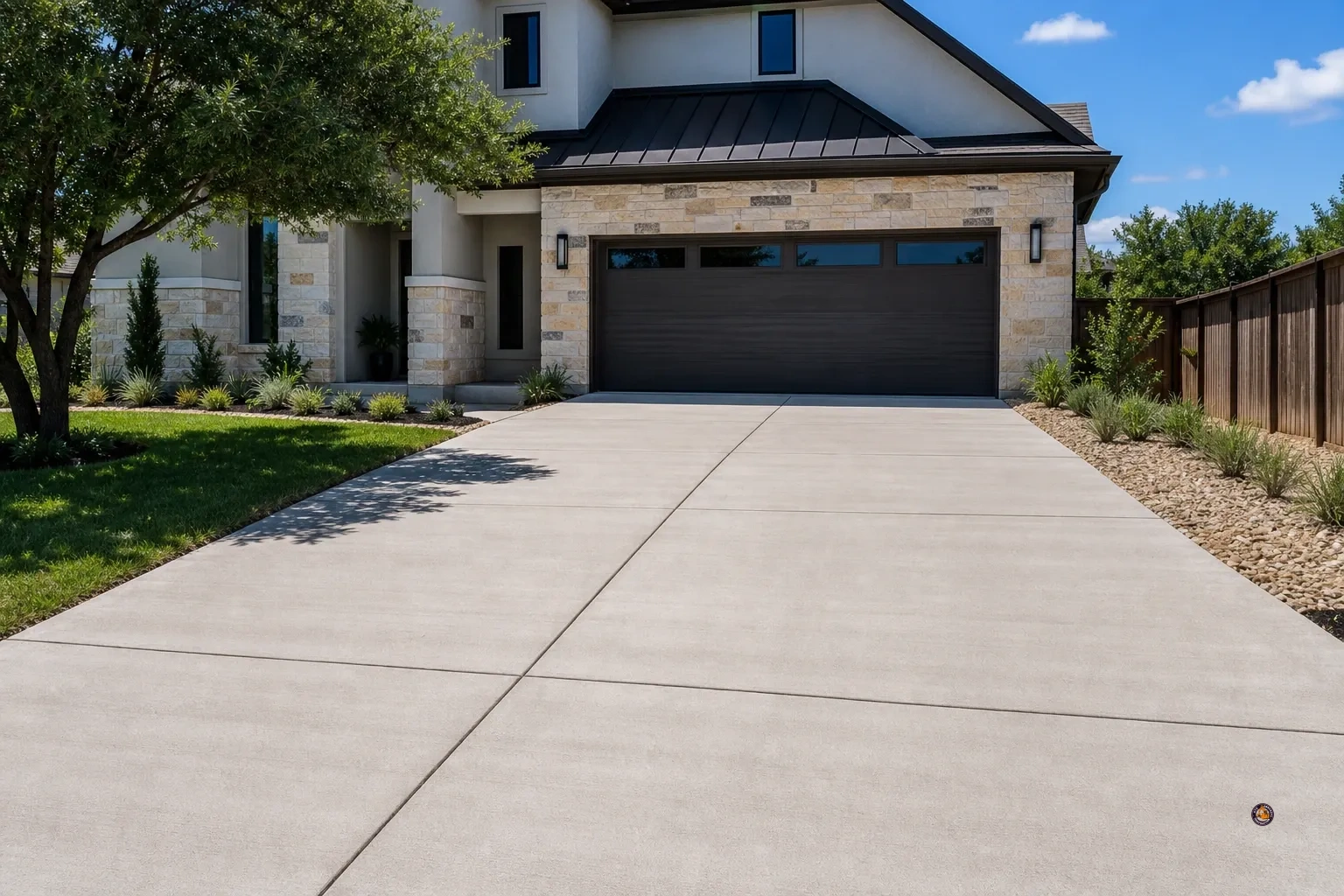
Driveways and driveway repair. For new or replacement driveways, insist on a joint layout plan, a clear access and pump plan if the truck cannot reach, and explicit notes on tie-ins to the street or alley. For repair or partial replacement, the scope should state how transitions will be handled, whether dowels at cold joints are specified by design, and what conditions would trigger a change order.
If you are searching for concrete driveway repair near Round Rock, make sure bids specify whether they are patching isolated failures or replacing full panels so you can compare like with like. Patios and outdoor living. For concrete patio installation in Buda TX, Hutto TX, or Round Rock TX, decorative decisions affect scope.
Patterns, release colors, and borders require extra forming and finish time. Confirm whether a sealer coat is included and how your landscaping will be protected during placement. To explore options, see our roundup of stamped and decorative concrete in Round Rock and Hutto.
Sidewalks and walkways. The scope should call out ADA considerations where applicable, transitions to driveways, and whether handrails, steps, or ramps are part of the work. Pool decks. Heat, slip resistance, and water exposure drive finish choices. The scope should state the finish type and where joints will land relative to coping, plus how equipment access to the backyard will be handled without damaging turf or irrigation.
Slabs and small foundations. If a foundation engineer has provided drawings, the scope should reference them for elevations and reinforcement rather than restating details from memory. Clarify who is responsible for anchor bolt placements and any embedded items. Retaining walls. The scope should reference plans for wall alignment, drainage features behind the wall, and finish texture if facing is visible.
Cutting and core drilling. Confirm who provides layout and verification of clear zones, how dust and slurry will be managed, and whether patches are included where penetrations must be closed after. Polishing, staining, and resurfacing. The scope should name how existing coatings, adhesives, or mastics will be removed, identify any crack or spall repair prior to finish, and set a target sheen, color, or texture with a mock-up area for approval.
Turn two look-alike quotes into apples-to-apples
Before you choose between bids for a concrete project scope in Austin TX:
- Highlight site notes. Do both scopes call out access, staging, drainage expectations, and utility responsibilities.
- Circle task definitions. Do both name demolition and haul-off, subgrade correction approach, base prep, formwork, pour method, finish, and joint plan.
- Compare outcomes. Do both define traffic timing, appearance targets, and who maintains protection during cure? Are warranty terms stated?
- Tally exclusions. What each bidder has explicitly excluded matters as much as what is “included.”
Spend ten minutes doing that and you will usually see why one price is lower and whether that difference is a missing step you care about.
Why thorough scopes matter in the greater Austin area
Across Austin, Round Rock, Cedar Park, Pflugerville, Buda, Hutto, and neighboring cities, access and staging often shape cost more than the finish does. Narrow side yards, mature trees, or steep driveways can limit truck reach. The scope should say how material will move to the placement area and what surfaces will be protected or restored. On live commercial sites, spell out work hours and traffic controls. On residential properties, define where crews can stage, how irrigation will be safeguarded, and how washout will be contained.
A quick read for common scope gaps
When we review homeowner and property manager scopes, the same omissions keep showing up: No joint layout or saw cut timing. This is the line that manages unavoidable movement, so get it on paper. Vague subgrade language. “Prep subgrade” without a method to identify and correct weak zones invites disputes later.
Silent on access and pumps. If a pump might be required, state who is covering it. Unclear cleanup and protection. Name which areas will be protected and restored, and who owns barricades during cure.
If you see those gaps, ask for addenda before you sign.
Where decorative choices meet scope discipline
Decorative work takes forethought. A stamped concrete patio is not just a finish; it is added forming, timing, and often color coordination. A polished garage or a stained interior slab changes the surface prep and protection plan. Your scope should align the decorative decision with the underlying tasks that make that look durable. If a mock-up is offered, accept it. A small test area sets the expectation for color, texture, and sheen far better than adjectives do.
What you can expect from a concrete contractor who treats scope as a first-class deliverable
ATX Concrete Contractor serves homeowners and property managers across the greater Austin area with residential and commercial concrete solutions, including foundations, driveways, patios, sidewalks and walkways, decorative and stamped concrete, concrete cutting and core drilling, concrete polishing and staining, concrete resurfacing, retaining walls, and pool deck installation and resurfacing. With over 15 years of experience and more than 500 completed projects, we emphasize high-quality materials, innovative techniques, and a meticulous, customer-focused approach. Our team offers free consultations and transparent pricing estimates, and we back our work with a 100 percent quality guarantee.
If you want a second set of eyes on your scope before you compare bids, ask for a no-pressure review that walks your site realities, tasks, and expected results line by line. A clear scope is the most cost-effective tool you can bring to any concrete project.