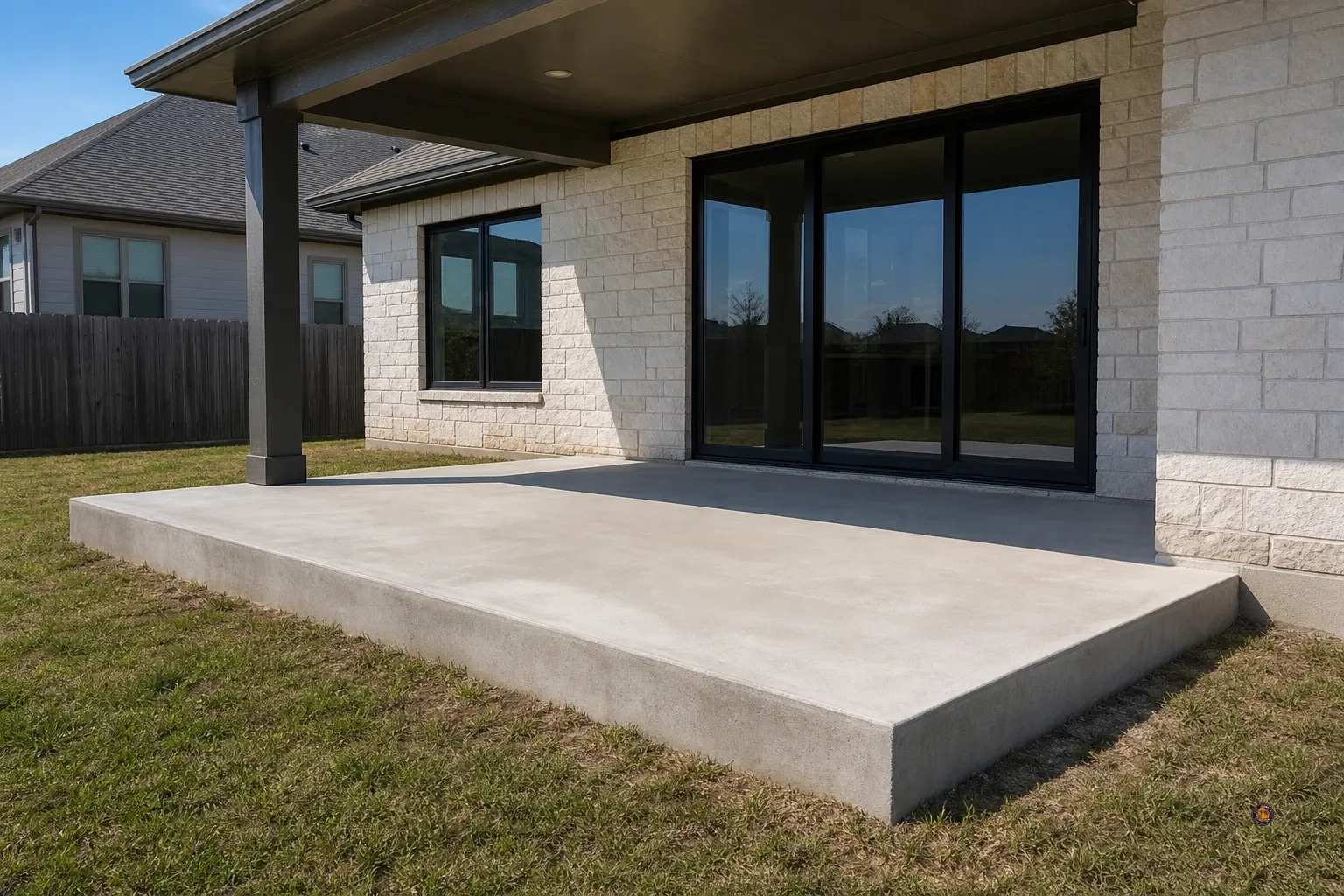
A concrete project scope must plainly name your site conditions, the specific tasks to be performed, and the results and responsibilities you expect. That clarity is what keeps your Austin work predictable on schedule and on budget.
The mistake that blows up budgets: choosing a number before reading the scopeThe mistake that blows up budgets: choosing a number before reading the scope Most overruns start with a simple error: picking the lowest bid without comparing what that bid actually covers. Two proposals that look close in price can hide very different assumptions about access, demolition, subgrade correction, joint layout, drainage handling, and post-pour responsibilities. On driveways, patios, pool decks, foundations, decorative finishes, and even cutting or polishing, what is and is not written into the scope determines your true cost, your timeline, and your result.
What your scope must explain before anyone mobilizes
Write the scope in plain language. Organize it into three parts: site realities, exact tasks, and results with responsibilities.
1) Site realities: name what the crew will face
Observers do not need engineering degrees. A short list of practical site notes makes the rest of the scope honest.
Access and staging. Where can crews park, position a pump, or run wheelbarrows without tearing up turf or exposing hazards. Identify gate widths, slopes, tight turns, and any surfaces that must be protected. Existing surfaces and structures. Note fences, trees, sheds, decks, utilities, sprinklers, edging, and any concrete or asphalt to remain or be demolished.
Drainage observations. Faqid=664). Constraints and hours. Noise limits, HOA rules, city requirements, school schedules, or delivery windows that affect work hours or sequencing.
Neighbor and street considerations. Street parking limits, narrow alleys, or flaggers if needed.
Why it matters: crews plan equipment, manpower, and sequencing around these realities. If they are missing, the number on your bid is a guess.
2) Exact tasks: define what happens, in what order
This is the guts of your scope. Spell out each activity so there is no debate later about what is included.
Demolition. What materials will be removed, how far, what gets hauled off, and who pays any landfill or recycling fees. Identify any items to protect or temporarily remove and reset (gates, pavers, fixtures). Subgrade evaluation and correction. Describe who will evaluate the base, what corrections are assumed, and how final elevations will be set to achieve the intended drainage. Avoid universal thickness or mix numbers in your scope unless an engineer or specification provides them.
Forming and layout. Name the footprint, edges, curves, borders, and any decorative bands. Call out control joint layout and spacing approach so it is not left to chance. Reinforcement and embeds. If reinforcement is specified by a designer, list the type of reinforcement and any sleeves, dowels, anchor bolts, or electrical/lighting conduits to be included.
Pour and placement. Identify the ready-mix delivery method (truck, pump, buggy), anticipated access path, anticipated pour window, and any traffic control needed. Finish.
State the finish type for each surface: broom, trowel, exposed aggregate, stamped pattern and color, stained color system, or polished level. If multiple finishes are planned, map where each applies.
Curing and protection. Clarify the curing approach and the protection period the contractor will provide, especially around pets, vehicles, lawn irrigation, and foot traffic. Cleanup and haul-off. Name what will be removed, how the site will be left, and any landscape restoration or temporary surface repair included.
Specialized tasks. Ask the contractor which compliance path they follow for the specific tasks in your scope OSHA concrete safety guidance.
Why it matters: when tasks are vague, bidders fill gaps with assumptions. Assumptions turn into change orders.
3) Results and responsibilities: define the handoff
This section prevents the “I thought you were doing that” conversation.
- Acceptance criteria.
- Who does what, when. State who calls in utility locates, who secures a permit if required, who handles inspections, and who is responsible for temporary barriers, cones, or tape.
- Post-pour responsibilities. If sealing is part of your plan, see our Essential Guide to Concrete Sealing in Austin for what that step actually involves Essential Guide To Concrete Sealing Protecting Your Investment In Austin Tx
- Warranty documentation. If warranties are offered, specify what is covered and the term in writing. Avoid blanket promises that sound good but are not written into the scope.
Why it matters: results and responsibilities set the finish line. Without them, everyone finishes a different race.
Project-type examples: what to insist on in writing
Use these prompts to tighten scopes for common projects across Austin, Round Rock, Hutto, and Buda.
Driveways. Specify access routing, demolition and haul-off, subgrade correction approach, control joint pattern that matches vehicle turning paths, and how water will exit to the street or swale. Patios. Define the exact footprint, yard access protection, finish type (broom, stamped, stained), control joint locations relative to furniture zones, and steps or transitions to doors.
Pool decks. Call out texture and reflectivity targets, expansion/isolation joint strategy around coping and structures, and how drainage avoids sending water back to the pool or into the house. Sidewalks and walkways. Clarify width, curvature, control joint spacing approach, and ADA transitions where applicable.
Foundations and slabs-on-grade. Coordinate with the designer’s specification. For background on what a slab entails, see our Essential Guide to Concrete Slabs for Construction Projects Concrete Slabs Essential Elements For Your Construction Project. Decorative concrete. Document color system, sample approval process, pattern names, release colors, and sealing plan if applicable. Do not rely on color names alone; include a sample or mock-up reference.
Cutting and core drilling. Identify exact locations, diameters, and depths, plus debris containment and silica control method in line with OSHA’s construction standard.
How to compare quotes in Austin using a quick scope test
Before you choose a number, run each proposal through this fast screen:
Does it describe site access, drainage observations, and constraints using your property’s specifics, not generic boilerplate? Does it list demolition, subgrade correction approach, forming details, pour method, finish, curing, and cleanup explicitly?
Does it show a control joint and expansion joint plan that you can sketch on a printed layout? Does it name who does post-pour tasks like saw-cutting, sealing (if part of your plan), and any decorative coloring or polishing?
Does it state how water will be managed during and after construction, and where concrete washout will be contained?
If permits, HOA approvals, or inspections are required, does it name who pulls them and when?
If a proposal fails this test, you are comparing guesses. Ask the contractor to revise the scope so you are choosing between complete plans.
A plain-language scope protects your wallet, your schedule, and your property You do not need to write a spec book. You do need a concrete project scope Austin TX contractors can read in five minutes and execute for the result you expect. State your site realities, the exact tasks, and the results and responsibilities. Then review each bid against that document.
For a simple overview of how a professional job should move from planning to pour and finish, see our walkthrough From Plan to Perfection | Understanding the Concrete Contracting Process From Plan To Perfection Understanding The Concrete Contracting Process
How we approach scopes at ATX Concrete
As a premier concrete contractor serving greater Austin, we build scopes in plain language and confirm assumptions before we mobilize. Our team emphasizes high-quality materials and meticulous craftsmanship, and we use innovative techniques to deliver durable, attractive work. We offer free consultations and transparent pricing estimates so you know exactly what your project includes. Our commitment is simple: a customer-focused process backed by a 100% quality guarantee.
If you want help translating your notes into a clear, buildable scope, reach out through Get Your Free Quote Today Contact We’re here to ensure your concrete project is a success from start to finish. Let us help you create a scope that meets your needs and sets the stage for a smooth construction process.