Before you select a concrete contractor in Austin, verify that the bid spells out every step of the prep work. That single check protects your concrete slab’s durability and your budget.
What decides whether a slab lasts is not the last 30 minutes of finishing
Pretty broom lines and a smooth edge are the last fraction of the job. Two bottom-line numbers that look close can be miles apart in what they include and what risks they leave on your property.
Here is what a thorough bid typically explains before anyone talks finish texture or color. Treat each line below as a question to every bidder, whether you found them through a “concrete company near me” search or by referral:
Where will water go after a storm, and how will the slab’s slope and adjacent grading manage it? Ask the contractor to show you their water plan for your layout and to explain why it fits your site. Utility locates and protection. Who calls in locates. How are shallow irrigation, lighting, or conduit runs protected or rerouted. Who pays if an unmarked line is found.
Demolition and haul-off. Exactly what is being removed, how it will be broken up, and where debris will go. Missing haul-off line items are a classic change order. Subgrade evaluation and correction. What is the condition of the native soil. Will soft spots be removed or bridged. How will the team verify that problem areas were corrected, not just covered.
What base, if any, is included under the slab. How will compaction be checked. The right approach depends on your site and use, so the bid should explain the method, not just a material name. If you are comparing options, our article on the question many homeowners ask, Is gravel needed under concrete, will help you frame smarter questions. Forms, layout, and elevation control. How will elevations be set to maintain door clearances, transitions to existing concrete, and planned landscape heights. Who approves final layout before the pour.
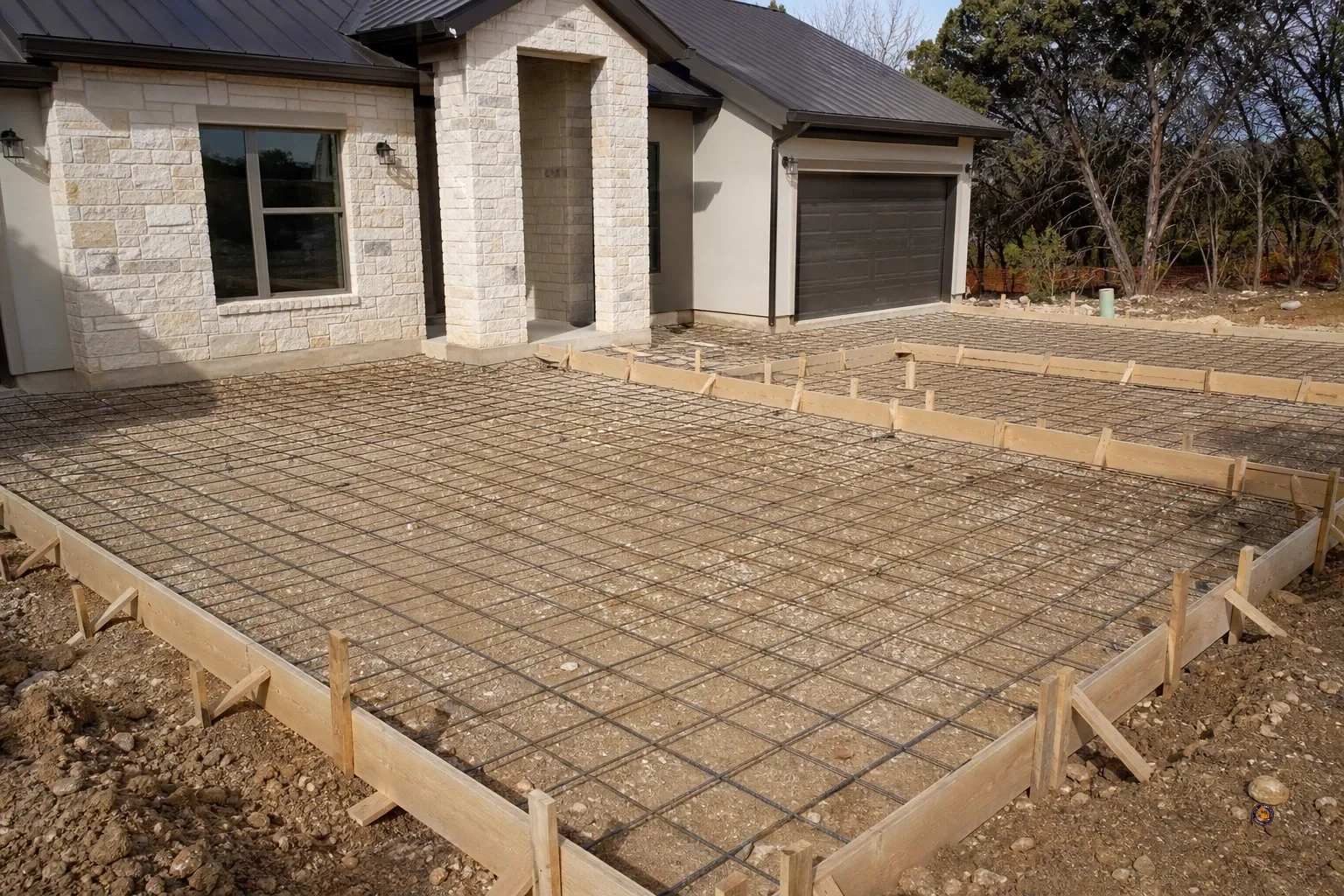
Reinforcement, if required by design. If it is not included, why not. Joint plan. Where will control joints go, how deep will they be cut, and who marks them on the forms before the pour. A clear joint layout channels inevitable shrinkage into neat lines rather than random cracking.
Weather plan and curing approach. What will the crew do if the weather shifts during placement. How will curing be handled for the concrete mix and conditions expected that week? Access and staging. Can the site accept a mixer truck? If not, is rehandling planned, and how does that affect quality control and schedule?
Washout containment. Where will washout be contained and how will it be removed afterward? Ask where the containment will be set and who is responsible for final cleanup. Sawcutting, if planned. When will cuts be made, how will dust be controlled, and what schedule is assumed for access and re-sealing after cuts. Cutting or coring concrete can release respirable crystalline silica, so bids should name the task timing and dust control method consistent with OSHA’s construction standard.
Cleanup and restoration: What will be restored after the pour. Landscape, turf edges, irrigation repairs, or fence panels removed for access. Permits and inspections, if applicable. Who pays reinspection fees if schedules slip.
Why low numbers fall apart after the pour
That creates nuisance puddles and can accelerate surface distress.
- Subgrade that shifts: Covering soft pockets without correction can lead to differential settlement and trip lips. Once the slab moves, there is no cosmetic fix that restores original support.
- Random cracking from poor jointing: Control joints are not decoration. They are the plan for where the concrete will crack on purpose. Without a clear layout and timely cutting, the slab decides for you.
- Surprise add-ons: If haul-off, utility work, or access logistics were not named, they often return as change orders or schedule delays. A bargain that becomes a string of add-ons costs more than a complete bid.
This is why our team’s constant refrain is scope before price. It is also why we published a deeper dive into slab fundamentals. If you want a quick foundation in what makes a slab perform well, bookmark our Essential Guide to Concrete Slabs for Construction Projects.
For driveways, patios, and pool decks, prep is different by use
Driveways. Vehicle loads, turning movements, and oil exposure add stresses you do not see on a patio. Patios and outdoor rooms. Surface performance, aesthetics, and water management dominate. If shade structures, kitchens, or spas are planned, the scope should anticipate post bases, embeds, conduit stubs, and slopes that keep water moving away from door thresholds.
Pool decks and surrounds. Slope, texture, and temperature management (shade or coatings) decide comfort and safety.
There is no single thickness, reinforcement, joint spacing, or curing schedule that fits every driveway or patio.
Seasonal reality in Austin: plan for swings, not averages
Confirm the weather plan. Ask bidders how they will handle placement if a front shifts wind and temperature, or if a pop-up storm hits. Do they reschedule, tent a small area, or adjust crew size? Ask how curing will be protected.
If timing your project around the season is on your mind, our Austin-focused notes on spring readiness in the Essential Guide to Preparing Concrete for Austin’s Spring Weather offer simple checks to bring up during your site walk.
A five-minute scope test you can run on every bid
You do not need to be an engineer to spot a complete plan. Use these quick prompts while you read:
Can you point to a sentence in the bid that explains how water will move off and around the slab?
- Does the document name who handles locates, demolition, and haul-off, and where debris goes?
- Is there a defined approach for subgrade correction and base, not just a material name?
- Do you see a reinforcement note that tells you where steel or fiber will be, or an explanation of why it is not part of this design?
- Is there a joint plan you can sketch on the footprint with a pen?
- Does the bid explain curing in one or two clear lines tailored to your project?
- Is washout containment mentioned with a spot on the site plan?
- Are post-pour responsibilities written down: cleanup, reseeding, fence reinstallation, pressure washing, or sealing if you chose it later?
If you cannot find these answers, send the bid back for clarification. If a contractor cannot or will not make the invisible work visible, the price is not telling you the truth.
How we keep Austin projects predictable
ATX Concrete Contractor is a premier concrete contractor serving the greater Austin area with residential and commercial solutions. Our team brings over 15 years of experience and more than 500 completed projects to the table, with a 98 percent customer satisfaction rate. We emphasize quality craftsmanship, high-grade materials, and a meticulous approach because that is what makes concrete durable and good-looking on day one and year ten. We also back our work with a 100 percent quality guarantee and provide free consultations with transparent pricing so you know what is included before you say yes.
Whether the job is a driveway in Austin, a backyard slab in Georgetown, or a patio in Buda, we approach scope the same way: put the preparation plan in writing so there are no surprises and so the finished slab performs.
The most common scope gaps we see, and the questions that close them
If you are shopping bids this week, here are the missing lines we encounter most often and the exact question to send back:
No drainage plan. “Please mark slab elevations and slope on the drawing, and explain where water will shed after storms.”. Vague base line. “Name the base material, how it will be compacted, and how you will confirm the compaction is adequate before the pour.”.
Missing joint layout. “Provide a sketch of control joint locations and state how soon after placement cuts will be made.”. Silence on washout. “Show the washout location on the site plan and confirm you handle removal.”.
Unclear access. “Explain how the mix will reach the forms and how rehandling will be minimized if the truck cannot access the slab.”. Curing is “as needed”. “State the curing method you will use for this mix and time of year.”.
No plan for edges and transitions. “Explain how transitions to existing slabs, the street, and thresholds will be set to prevent trip lips or trapped water.”. Ambiguous reinforcement. “If reinforcement is included, specify type and placement. If not, explain why it is not part of this scope.”.
Use these questions with any reputable concrete contractor. Good teams answer them quickly because they ask and solve these issues on every project.
The right “affordable” bid is the one that prevents expensive outcomes
If you want a quick primer to speed your comparison, start with our Essential Guide to Concrete Slabs for Construction Projects and pair it with the practical lens from Is gravel needed under concrete. Five minutes with those articles will make you a sharper buyer.
If you would like a consult that starts with scope, not a guess at square-foot pricing, we are ready to walk your site and detail a complete plan for your slab. We serve Austin and surrounding communities every day and have built our reputation on getting the preparation right so the finished concrete looks great and lasts.