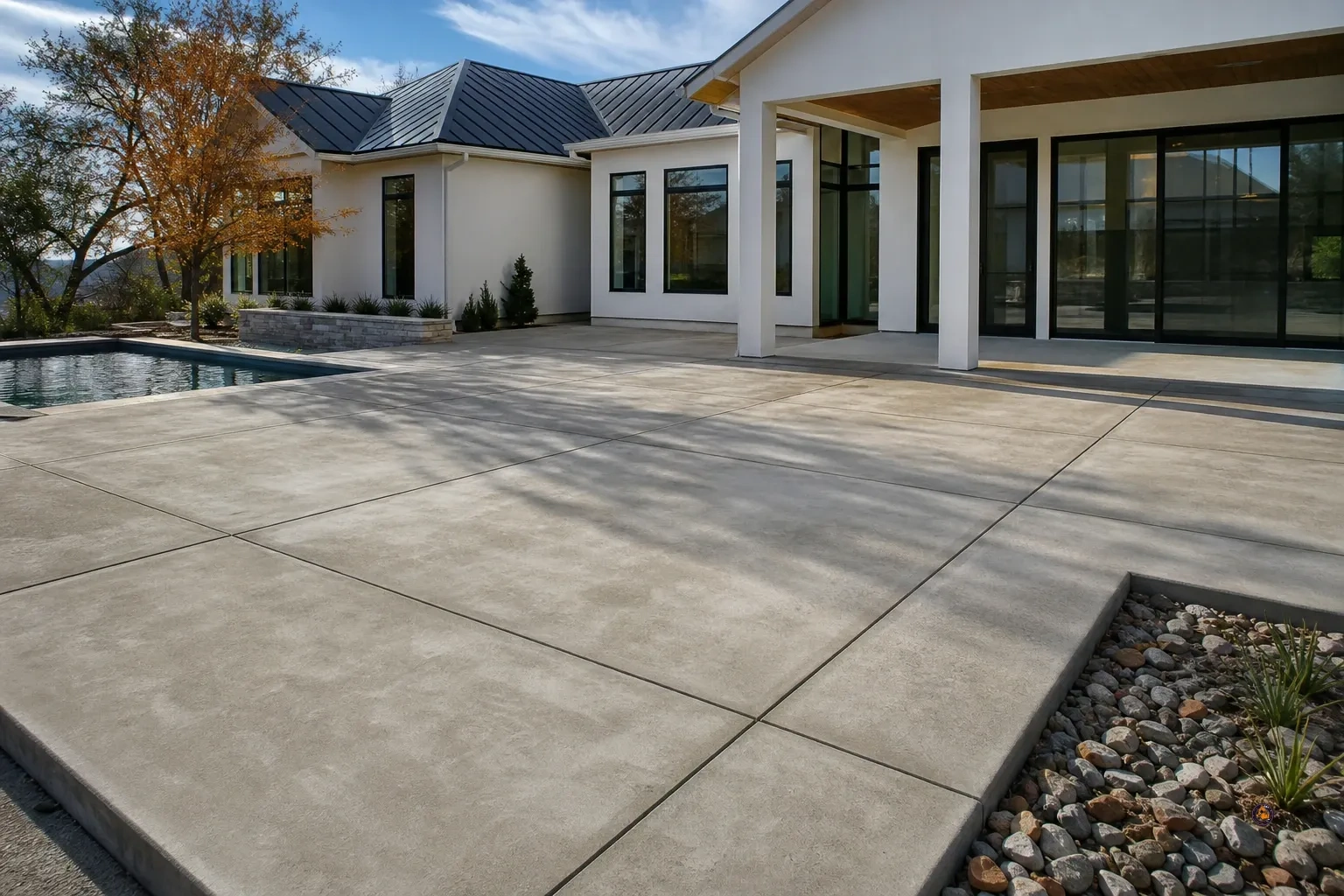
ATX Concrete Contractor recommends assessing site conditions before selecting a concrete solution to ensure durability and aesthetics. A quick walk to note slope, drainage paths, sun exposure, shade, and the condition of any base or existing slab will inform you of what your concrete needs this season and which upgrades will hold up. From there, prioritize timing your pour during stable weather windows, protect exposed surfaces from heat, and make small repairs before they become significant issues.
What should you do with your concrete right now?
Now is the time to pair a basic site assessment with season-appropriate actions. Schedule new pours during stable, moderate temperatures, typically defined as between 50°F and 85°F, with a clear forecast and a defined curing plan. For existing slabs, gently clean the surface, keep joints clear, address minor cracks, and consider resealing high-wear areas. If you are eyeing decorative upgrades, plan them around temperature and moisture to ensure surface treatments bond and cure as designed.
Considerations for seasonal concrete work include targeting stable, moderate temperatures and a dry forecast for the best time to pour. Early-day placements help manage heat, and confirming a curing plan before you book is essential. In summer, focus on shade and moisture management during curing, gentle cleaning, and monitoring joints to limit heat-related stress. As fall approaches, clean and inspect your concrete, mark drainage paths, trim edges, and schedule sealing or resurfacing before colder, wetter periods. For decorative options, such as stained, polished, or stamped finishes, ensure the right surface prep and curing window by booking when the forecast and substrate are ready. The main risk to manage is rapid moisture loss or unexpected rain, which can compromise curing and finish quality, so plan for curing and protection upfront.
Why timing and site conditions decide your outcome
Weather awareness is crucial for keeping curing on track, where real strength develops. The American Concrete Institute provides detailed guidance on curing and the variables that affect it. While you do not need to memorize these standards, you should insist on a curing plan appropriate to your site and season. Site conditions, especially drainage and grading, are equally decisive in determining the success of your concrete work.
When weather is hot, how should you care for your concrete?
During hotter periods, keep expectations realistic and maintenance simple. Clean with a mild detergent and a soft brush or low-pressure rinse rather than blasting the surface. Keep joints free of debris so they can accommodate movement. If you plan to reseal, choose a window with steady temperatures and shade time to ensure the coating lays down evenly and cures as intended. Ask your contractor how they will protect fresh concrete from rapid moisture loss and wind exposure in the first days. For finished slabs, monitor how sprinklers and roof runoff interact with your concrete. Redirect overspray that keeps edges perpetually wet and verify that downspouts are not eroding the base.
When considering whether sealing is worth it for patios, walks, or pool decks that experience heavy use, read "Seal the Deal: The Purpose and Benefits of Professional Concrete Sealing." This resource explains how sealing supports appearance and maintenance without overpromising a “no-crack” surface.
Which fall steps extend slab life into winter?
Think of fall as your reset. Note any small cracks, worn sealers, or spalled edges to decide whether to seal, resurface, or simply monitor. Trimming turf that has crept over edges restores clean margins and makes drainage more predictable. If resealing or applying a decorative overlay is on your list, booking in fall often provides steadier temperatures that help coatings bond and cure. Where hairline cracks exist, your contractor can help you distinguish between typical shrinkage and movement that suggests another issue. For homeowners planning their seasonal maintenance, our "Essential Guide to Preparing Concrete for Austin’s Spring Weather" is a useful companion, and when temperatures drop further, "Concrete Work in Winter: What Austin Homeowners Need to Know" covers additional variables to consider.
When should you schedule a new pour for the best results?
Stability protects finishing and early curing, which are critical for long-term performance. Early-day placements can help manage surface temperatures during hotter periods, while shaded or tented areas can buffer wind and sun if needed. The timing of your project queue is also important; decorative work, such as stamped patios and integral color, is sensitive to both weather and crew availability. A written plan detailing the who, what, and how of curing is as important as the pour date itself.
What should you budget for seasonal concrete work?
There is no single “per yard” or “per square foot” price we can publish responsibly. Decorative work, staining, polishing, or stamped textures add craft time that influences price. Cost variations are typical based on market conditions and project specifics. A better approach is to pin down the variables. Ask for a line-item estimate that details site preparation, base material, concrete placement, finishing, curing approach, and any decorative steps.
Inquire about schedule sensitivity to weather and the protections planned if the forecast shifts. To keep your comparison tight and relevant, consider these questions with any provider you evaluate: What curing method will you use for my slab in these conditions, and how will you protect the surface in the first week? How does the estimate change if access requires a pump, or if you discover soft subgrade during prep? Where will stormwater go during and after the project, and how does this design support that path? For cutting, grinding, or polishing, how will you control silica dust and protect adjacent areas?
What are your insurance limits, and which permits or registrations are required for this scope? Transparent scopes reduce surprises, and season-savvy scheduling minimizes rework.
For a deeper look at how process shapes results, see "From Plan to Perfection | Understanding the Concrete Contracting Process." If sealing is part of your maintenance plan, "Seal the Deal: The Purpose and Benefits of Professional Concrete Sealing" outlines what to expect and how to think about timing.
Local insight without the guesswork
Two practical habits outperform rules of thumb. First, walk your site after a rain. If water sits where you want a patio or flows toward a garage, solve the drainage issue in design rather than after the pour. Second, put curing in writing. The American Concrete Institute’s curing resources emphasize that there is no one-size-fits-all number of days or universal method. What matters is matching the approach to your mix, finish, and environment to control moisture loss and protect the surface as it gains strength.
Homeowners and property managers often ask whether to repair or resurface a worn slab. The decision starts with surface prep and realistic expectations. Resurfacing can refresh appearance and provide texture, but only if the base is sound and the surface is prepared correctly. If grinding or cutting are part of the scope, confirm your provider follows OSHA’s silica rule for construction to capture dust and protect neighbors and workers.
If you are mapping your maintenance across the year, pair this guidance with two timely resources from our blog. For warm-up months, read the "Essential Guide to Preparing Concrete for Austin’s Spring Weather" to align cleaning, inspection, and small fixes before the busy season.
ATX Concrete Contractor serves homeowners and property managers throughout the greater Austin area, from patios and walks to decorative, polished, and stained finishes. With over 15 years in the trade, more than 500 completed projects, and a 98 percent customer satisfaction rate, we approach each project with a meticulous eye on materials, timing, and workmanship. Our team backs every job with a 100 percent quality guarantee and offers free consultations with transparent estimates so you can plan the right scope at the right time.
For related details, review How to Choose the Best Concrete Company Near You in Austin and The Lowest Concrete Bid Is Only a Bargain If the Prep Work Is Included.
Ready to align your project with the season? Contact ATX Concrete Contractor in Austin for a site walk and a no-pressure estimate. Start with a short call and bring your notes on drainage, sun exposure, and your ideal look. We will help you decide whether to pour, seal, resurface, or simply maintain, and we will schedule it when conditions favor a long-lasting result.